Olga Mykhoparkina
Founder, CEO

Olga Mykhoparkina
May 05, 2026We spent several days (and quite a few AI credits) scanning hundreds of high-intent SaaS prompts across ChatGPT, Claude, Perplexity, and Gemini — then analyzed over 10,000 citations to understand exactly where these models pull their information from. Here’s what we found.
We tested hundreds of prompts likely to have a software in the answer. We’ve chosen the prompts that people would ask looking for a SaaS product, prompts that include “tools”, “software”, “alternatives to”, etc. Examples:
We scanned them all with Allmond.app and structured the results. We looked at the Sources – the Citations sections that shows which URLs an LLM used to deliver an answer to a prompt. The findings have been fascinating. Let me just share this screenshot:

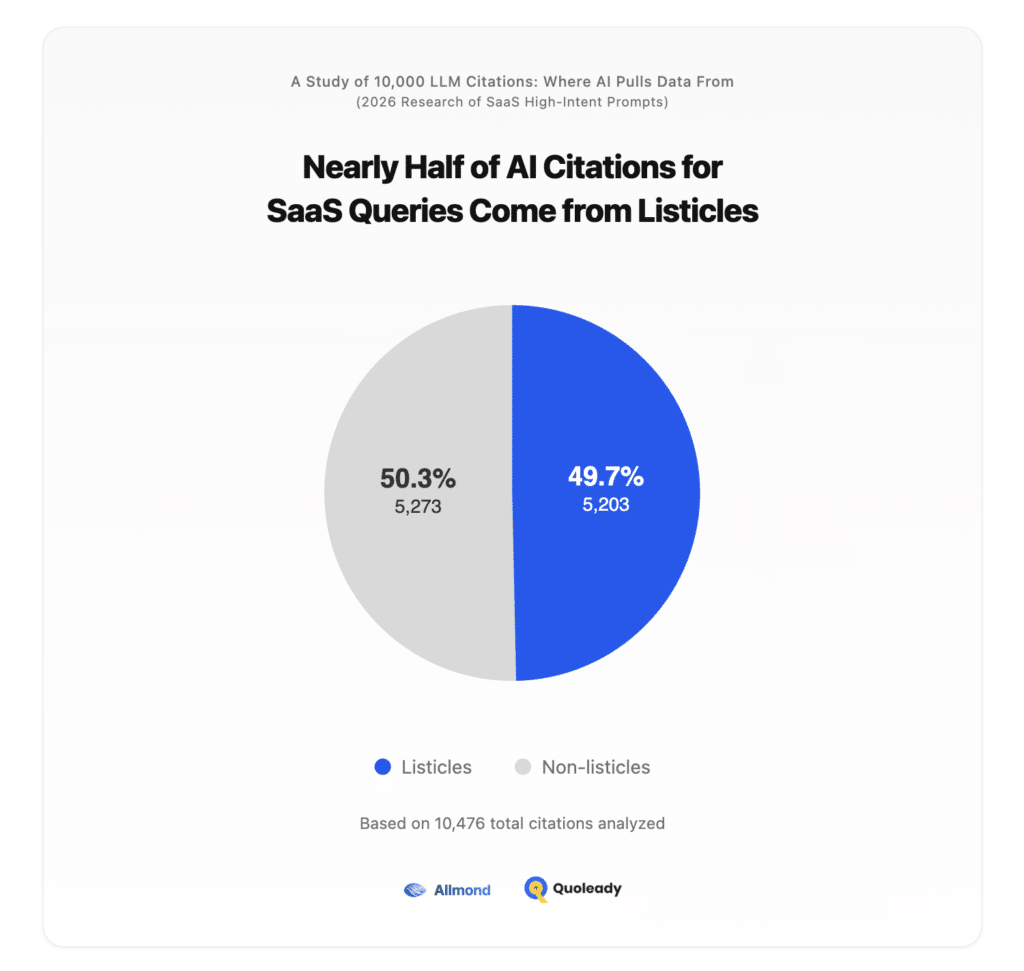
One of the main conclusion of the research has been around Listicles and their impressive % in the overall Citation sources structure. I couldn’t believe that 50% of the sources are actually listicles – mostly blog articles with lists of software tools like
“Top X %industry% software in 2026”
“Best X %industry% tools in 2026”
“X alternatives to %competitor software% in 2026”
etc.
But let me explain all our findings step by step.
First, let’s take a look at the:
What this means for SaaS:
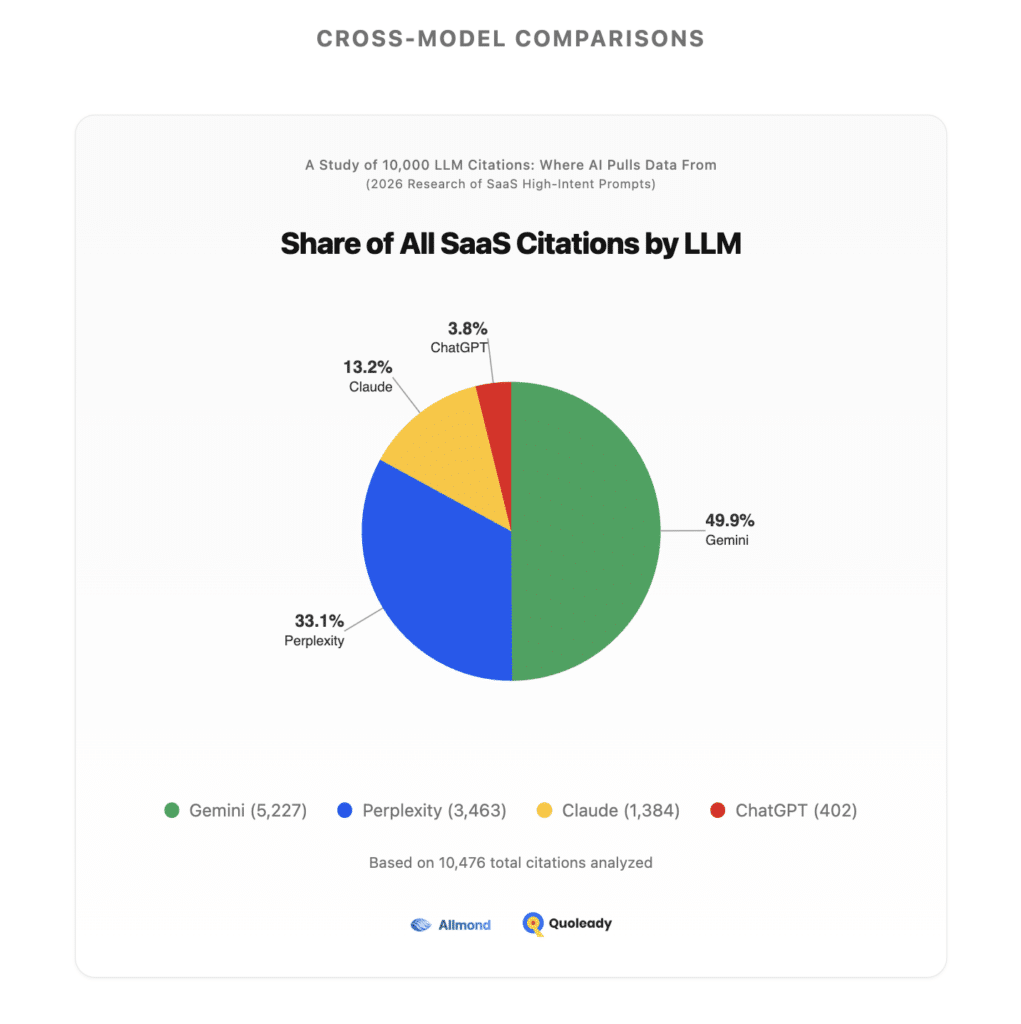
For SaaS companies, this means visibility in AI answers doesn’t work the same across models. Some models rely heavily on external sources when generating responses, while others answer more often from internal knowledge.
As a result, being cited across the web becomes much more important for models like Gemini and Perplexity, where citations directly shape which brands appear in answers. With models that cite less frequently, brand presence in training data and widely referenced sources becomes more important.
However, it doesn’t mean online content isn’t imporatnt for LLMs that rely less on web search and more on internal knowledge base. For SaaS companies, appearing in widely referenced web sources is still critical. Much of the knowledge LLMs learn about software tools originates from publicly available web content (blog posts, comparison pages, and listicles).
When brands are consistently mentioned in these sources, they are more likely to appear in the datasets used to train future models. As a result, they become more likely to surface in AI-generated answers.
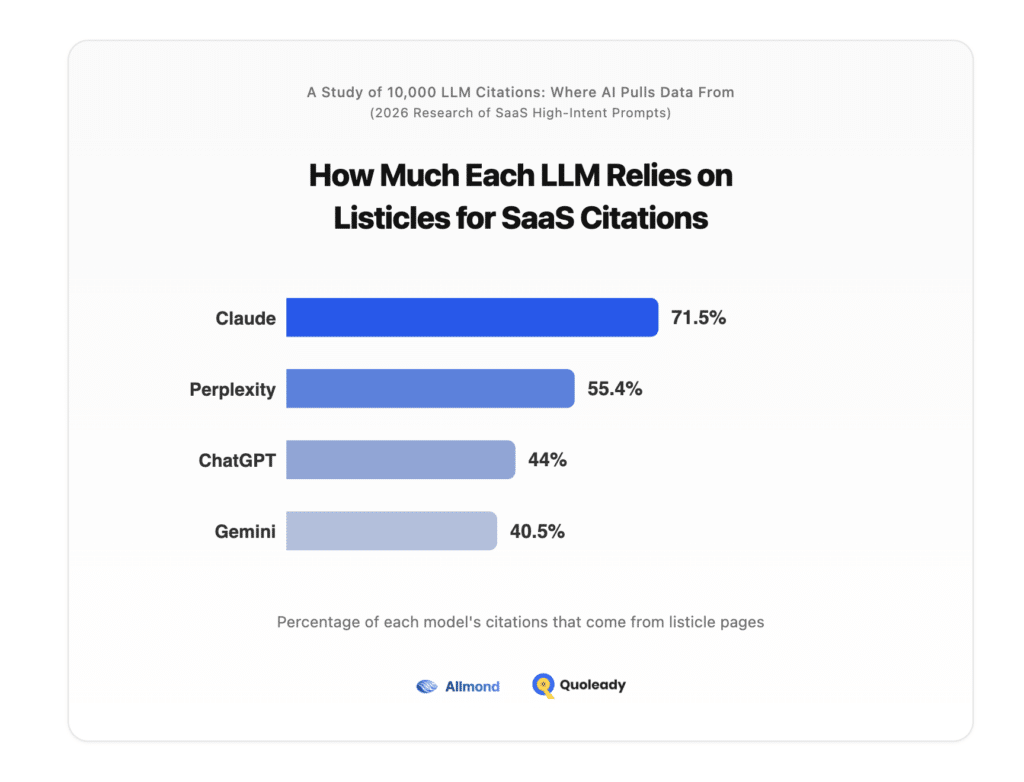
Claude relies on listicles for over 70% of its citations — far more than any other model. Even the least listicle-dependent model (Gemini) still pulls 40% from listicles.
What this means for SaaS:
Getting featured on listicle pages (“best X tools”, “top Y software”) is the single most impactful thing you can do for AI visibility of your SaaS. It’s the primary citation source across all LLMs.
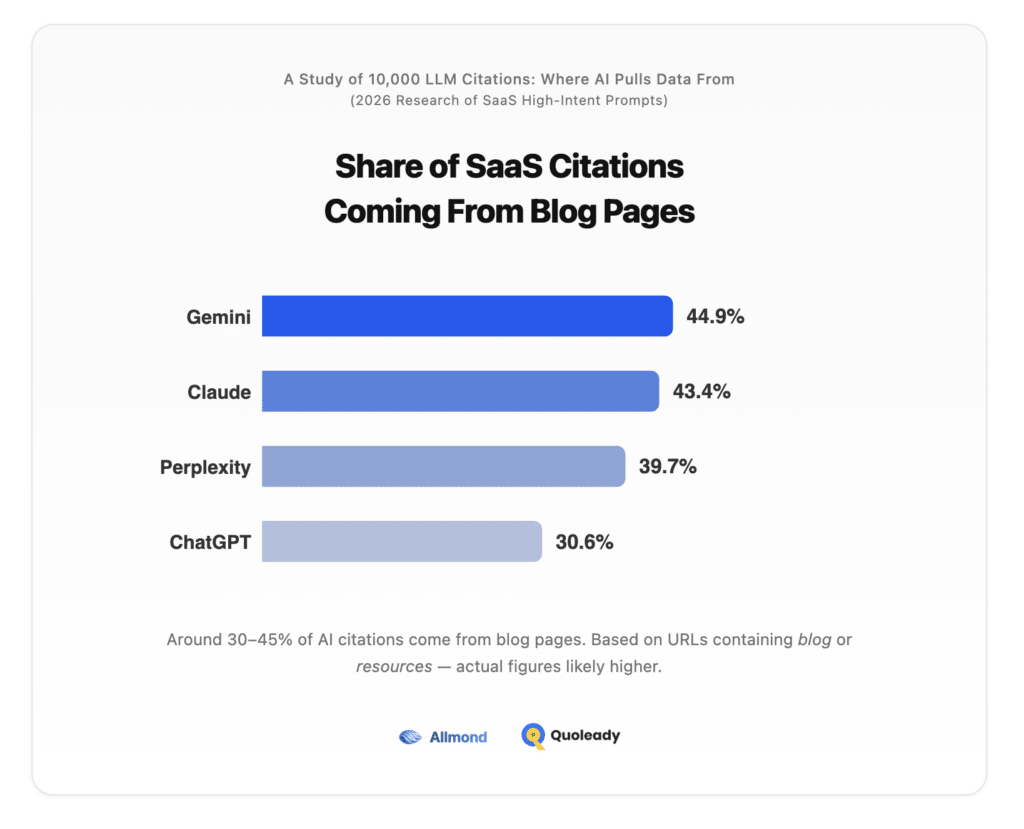
30–45% of citations come from blog pages across all models. Gemini and Claude lead, while ChatGPT is lowest at 30.6%.
What this means for SaaS:
Blog content is a major citation source. Publishing in-depth comparison posts and category reviews on your blog (or getting featured on others’ blogs) directly increases your chances of being cited by AI.
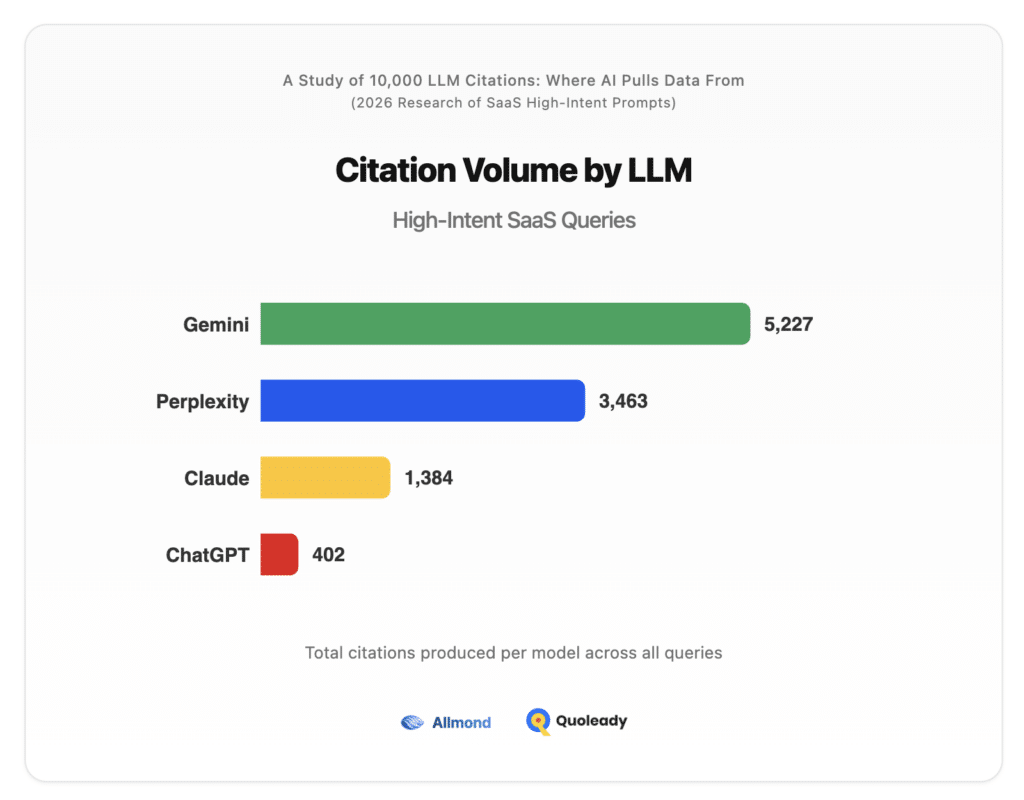
Gemini produces 13x more citations than ChatGPT per query. This gap is largely explained by how each model handles web search: ChatGPT only produces citations when it triggers a web search — if it answers from training data, the response contains zero citation URLs, even if it mentions your brand. Perplexity, by contrast, always searches and cites on top of using internal knowledge base.
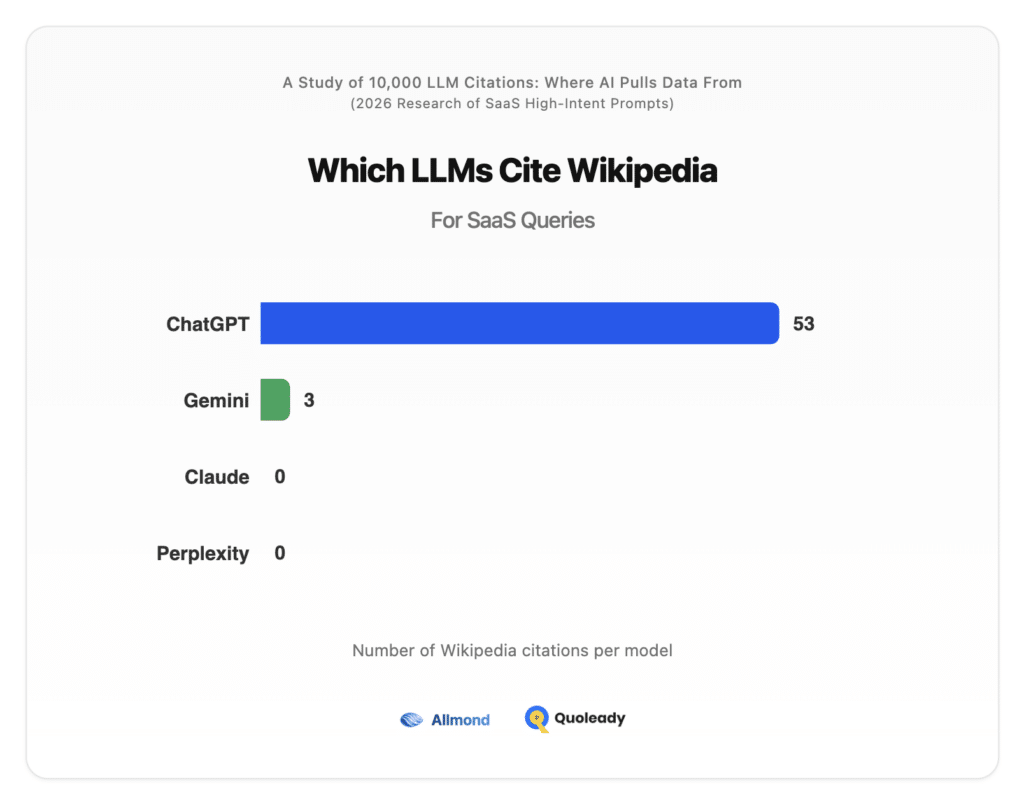
Wikipedia is almost irrelevant for high-intent SaaS queries. Only ChatGPT cites it meaningfully (53 citations), and Claude and Perplexity ignore it entirely.
What this means for SaaS:
For high-intent SaaS queries, having a Wikipedia page won’t move the needle. LLMs prefer specialized, up-to-date content over encyclopedic entries when answering software buying questions. Wikipedia may still matter for brand awareness or informational queries — but not for purchase-intent prompts when choosing a software provider.
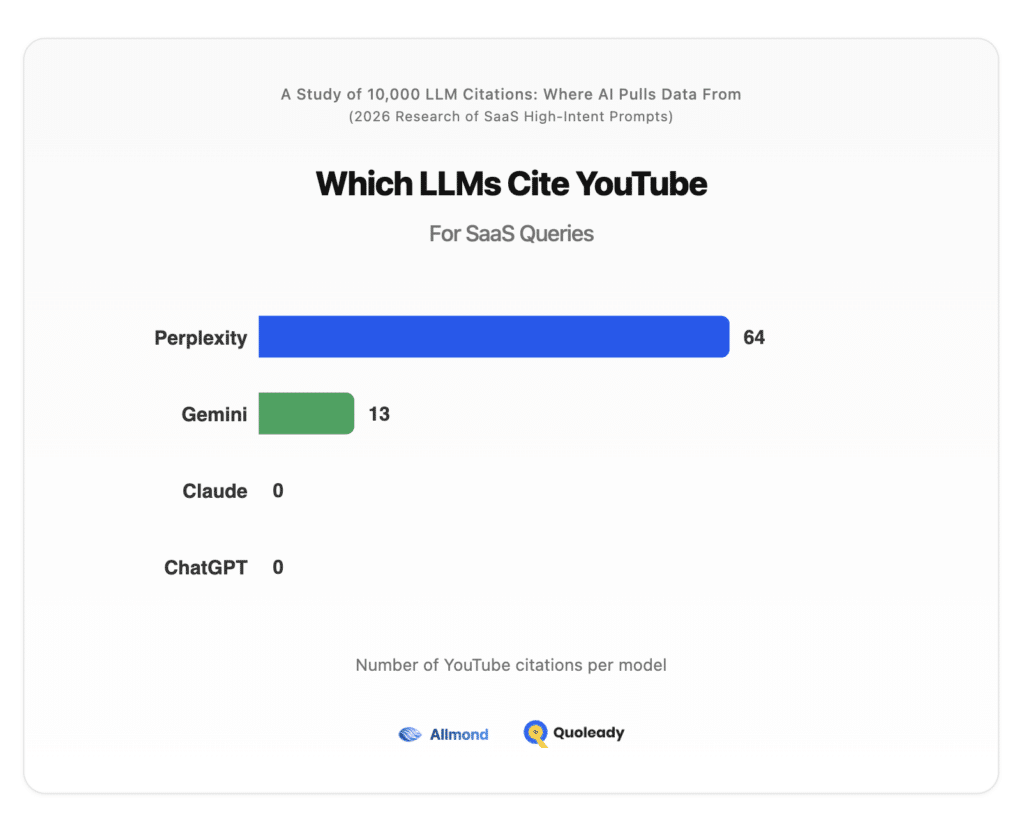
YouTube citations are rare overall. Perplexity is the only model that cites YouTube with any consistency (64 citations). Claude and ChatGPT ignore it completely.
What this means for SaaS:
YouTube content is not a primary driver for AI citations today (again, we are talking about high-intent SaaS prompts). However, Perplexity’s usage suggests video may become more relevant. Don’t prioritize it for AI visibility — but don’t abandon it either.
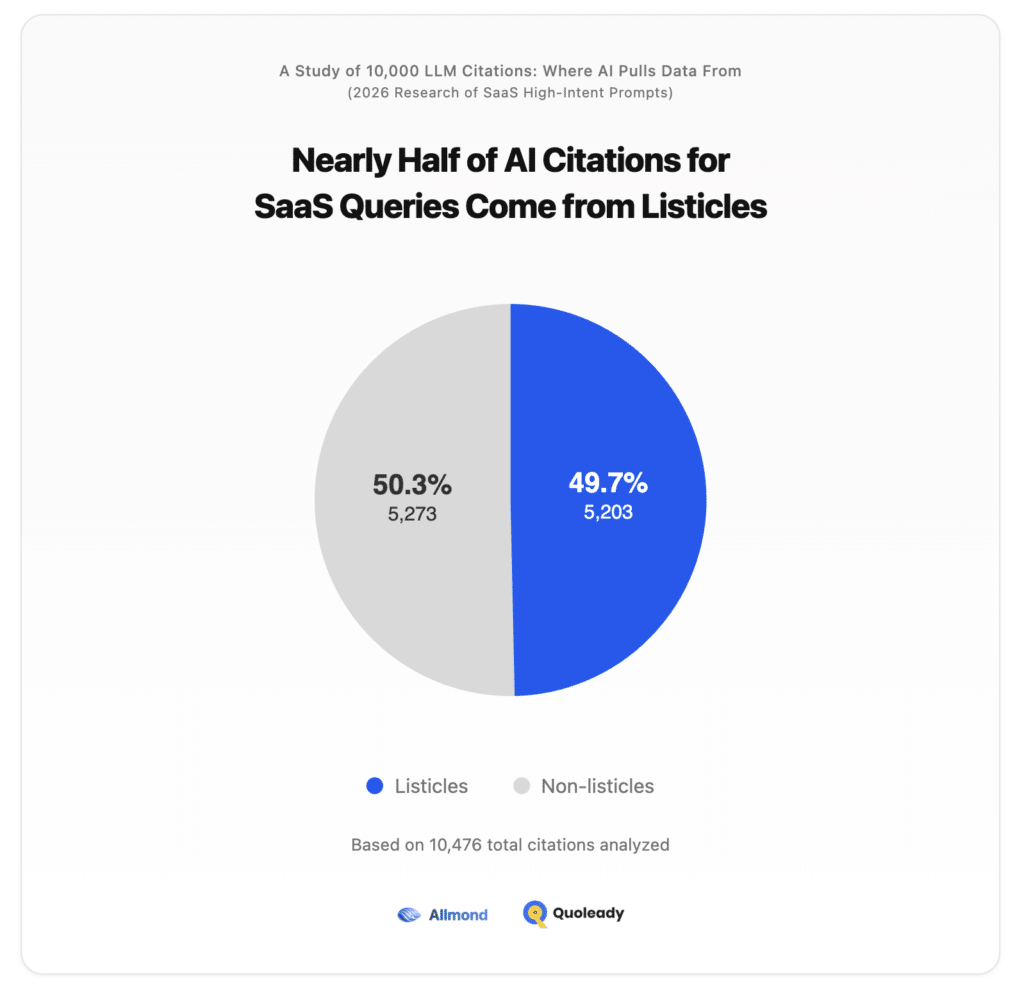
Across all queries and all models combined, nearly half of every citation points to a listicle page. This is the single dominant content format in AI-generated answers.
What this means for SaaS:
If your product isn’t appearing on listicle pages, you’re invisible to almost half the AI citation pipeline. Prioritize listicle placements — through outreach, guest posts, or creating your own. Check out my LinkedIn post on how to get featured on top-ranking SaaS listicles, it should help a lot.
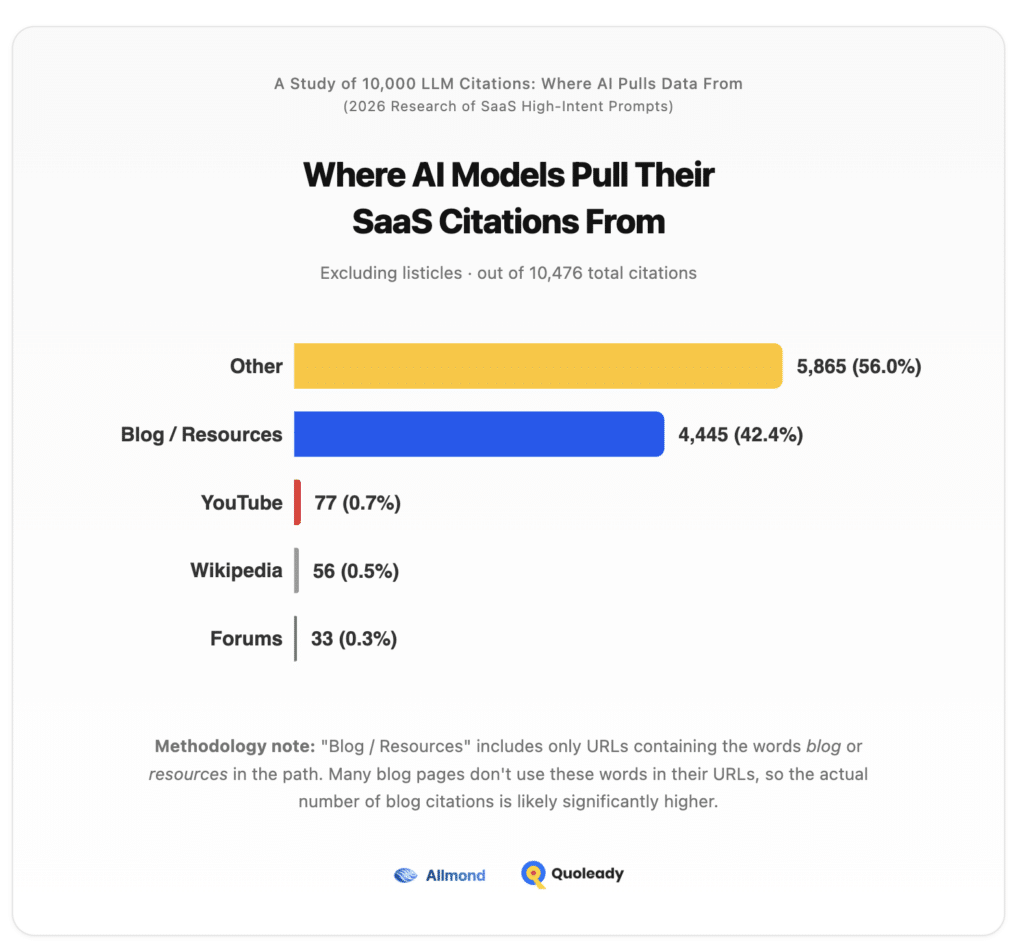
Not to get our readers confused we’ve broken down the Citations formats:
First, into
1. listicles and
2. non-listicles (other) and
Second, into
1. Blogs/resource pages
2. YouTube
3. Wikipedia,
4. Forums (Reddit, Quora and community platforms.) and
5. Other.
Our research shows that Blog/Resources are the most common sources of LLM citationts while YouTube, Wikipedia, and forums are marginal.
What this means for SaaS:
Are you still wondering whether or not you should invest in your blog? How about this – blog posts account for more than 42% of the LLM sources. Forums and community content are nearly invisible to LLMs despite often containing genuine user insights. So unless for your SaaS niche specifically Reddit is a big thing, I wouldn’t advise to bet on this channel for your AI visibility despite all the “Reddit is on the rise” rumours.
But wait, here comes my favorite – ‘Alternatives’ prompts.
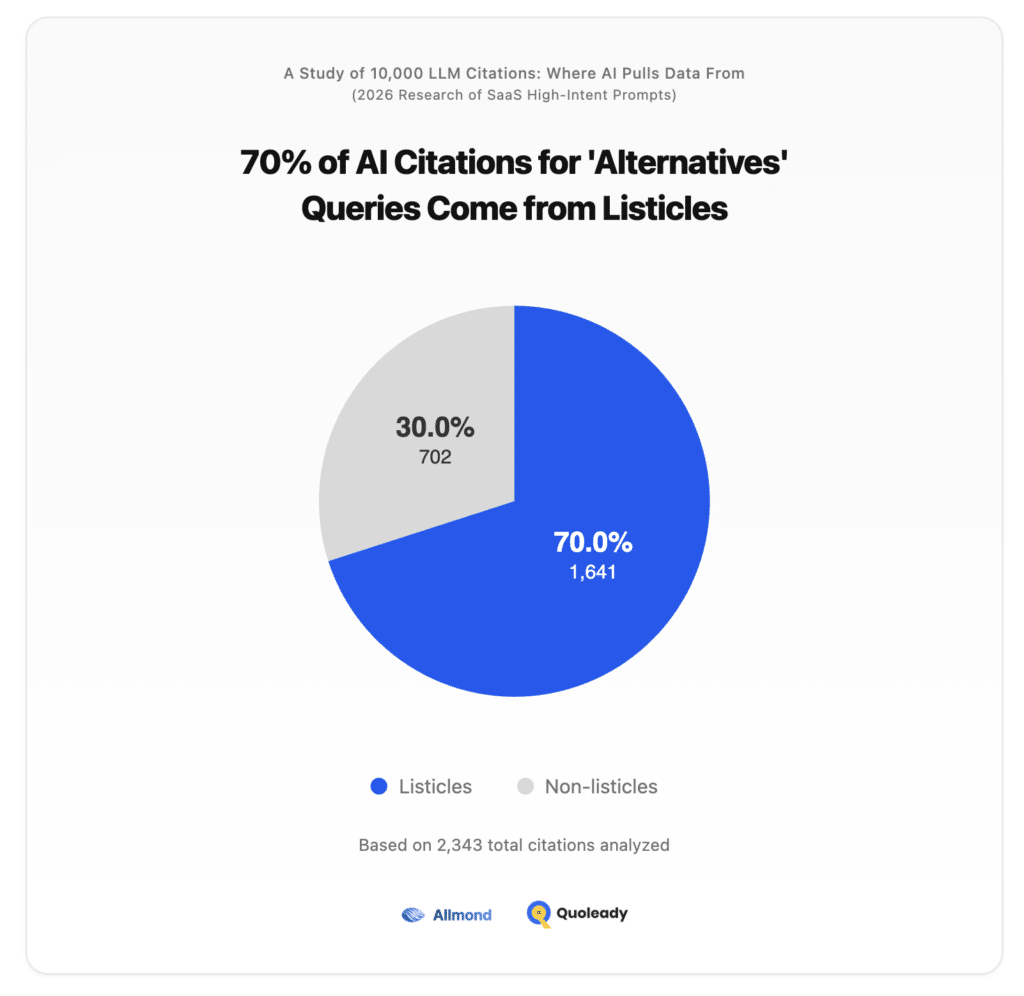
For “alternatives to X” queries, listicle dominance jumps to 70% — the highest of any query type. These queries are inherently list-shaped, and LLMs reflect that.
What this means for SaaS:
If competitors’ users are searching for alternatives, you MUST appear on listicle pages to capture that demand. This is the highest-ROI content format for competitive positioning in AI answers.
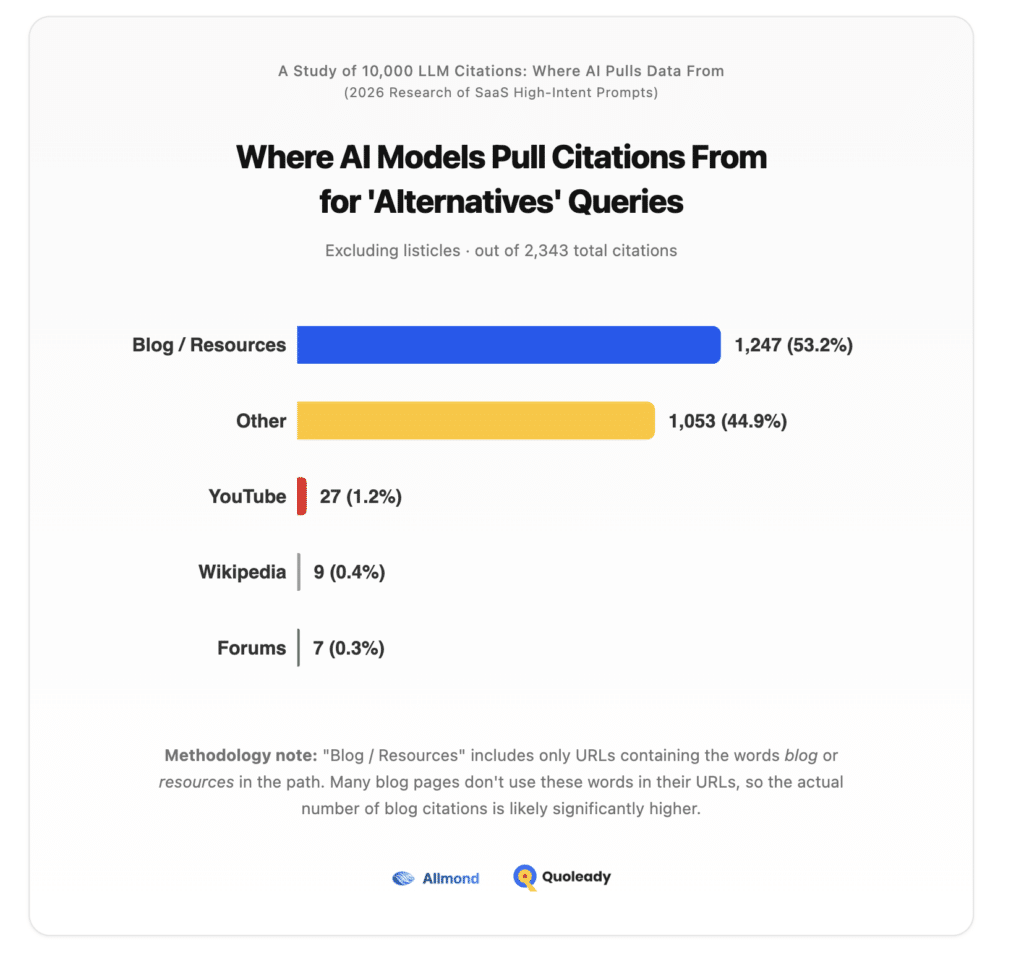
Now let’s look at each LLM and see which sources it relies on.
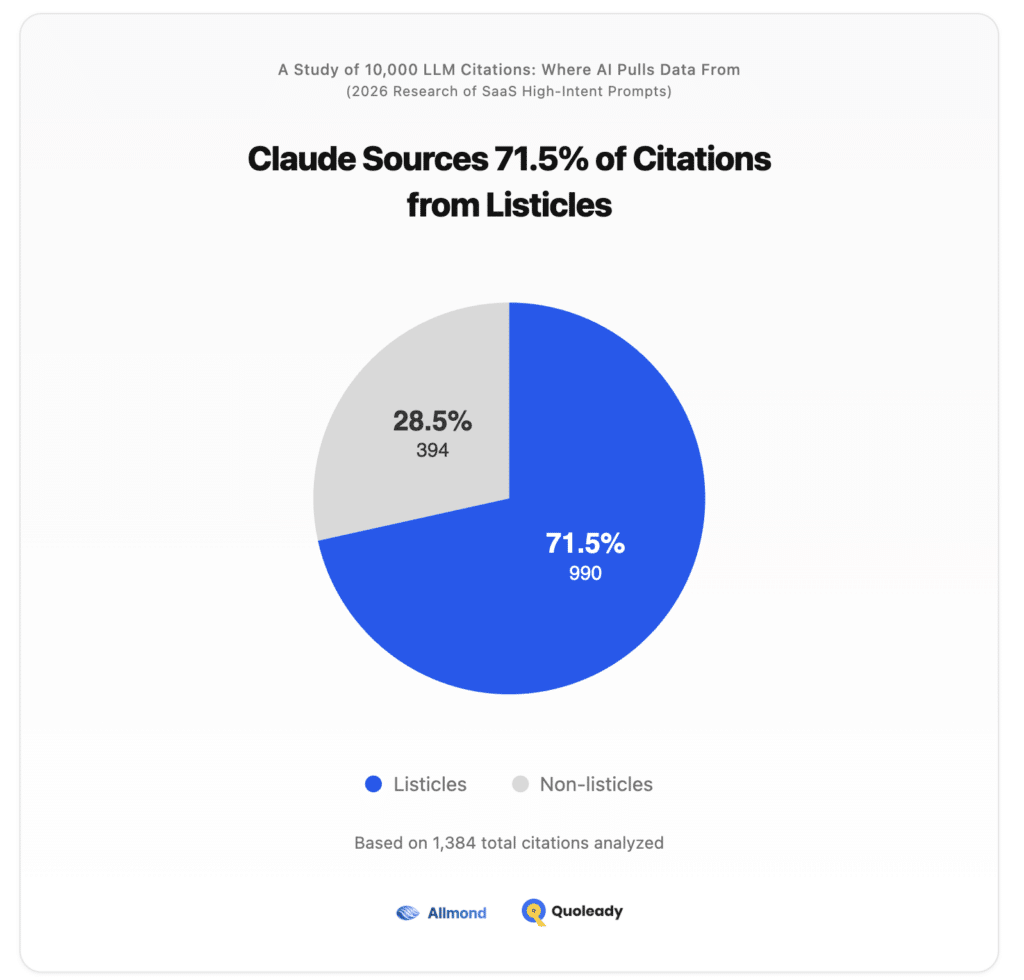
Claude is the most listicle-dependent model at 71.5%. Nearly three out of four Claude citations come from listicle pages.
What this means for SaaS:
Claude users get overwhelmingly listicle-sourced answers. If your product is on the right listicles, Claude will cite you. If not, you’re essentially invisible to Claude’s audience.
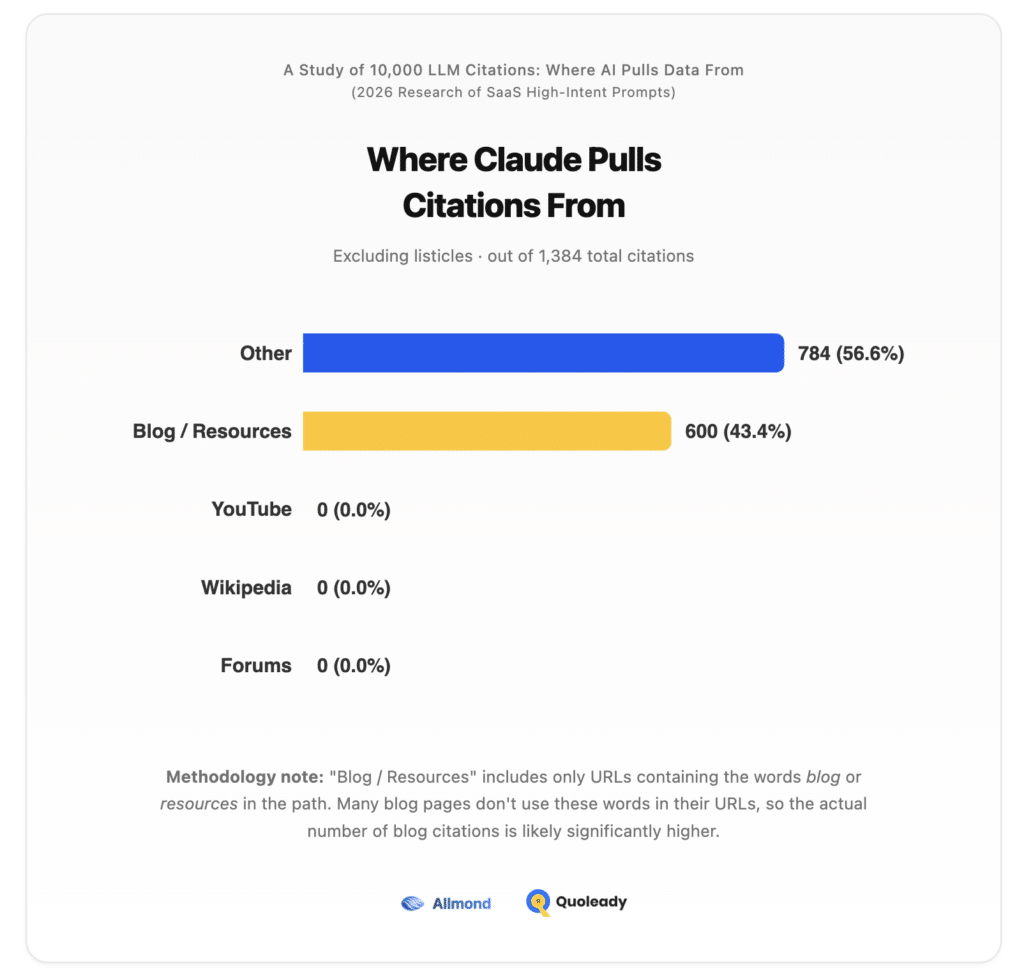
Claude cites zero YouTube, Wikipedia, or forum sources but relies heavily on blog articles.
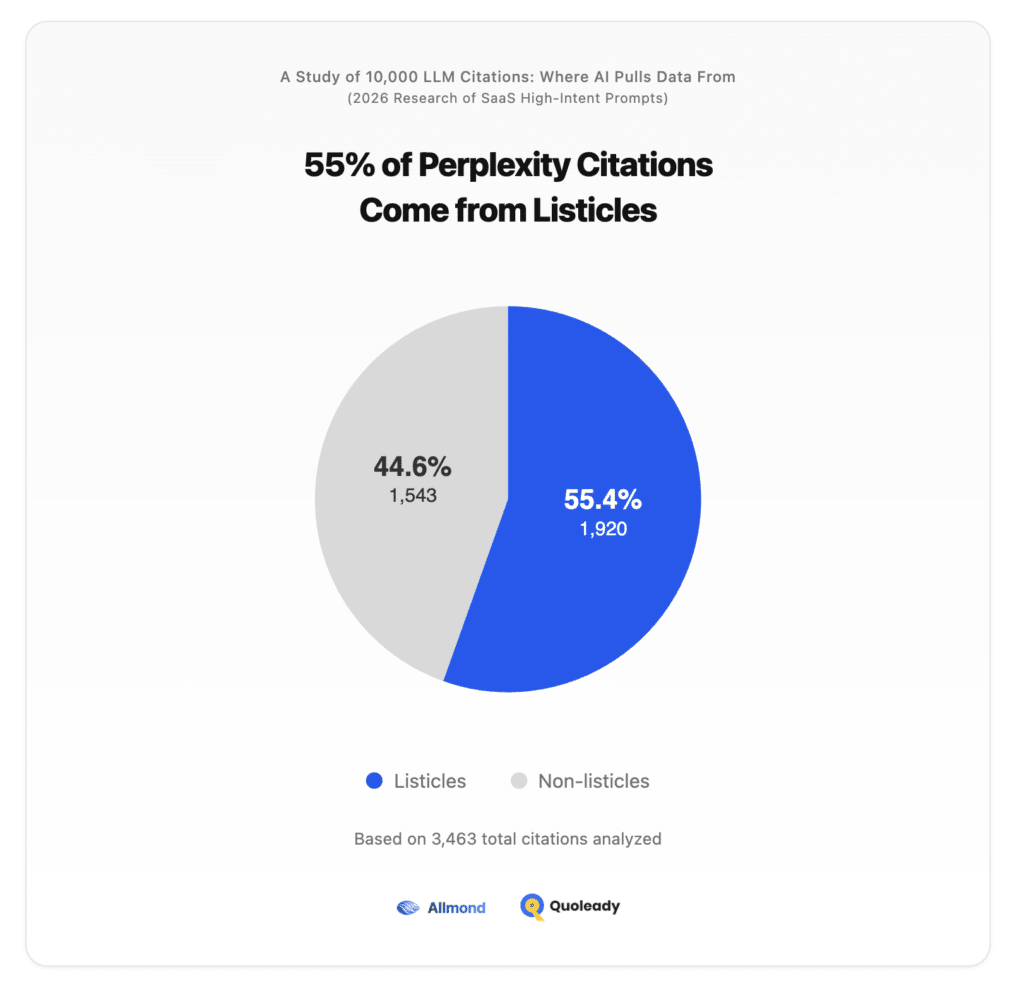
Perplexity cites listicles 55% of the time — second only to Claude. As a search-first product, Perplexity pulls from a wider range of sources but still leans heavily on listicles.
What this means for SaaS:
Perplexity combines search behavior with AI — its users are actively looking for answers. Being on listicles that rank well traditionally also increases your Perplexity visibility.
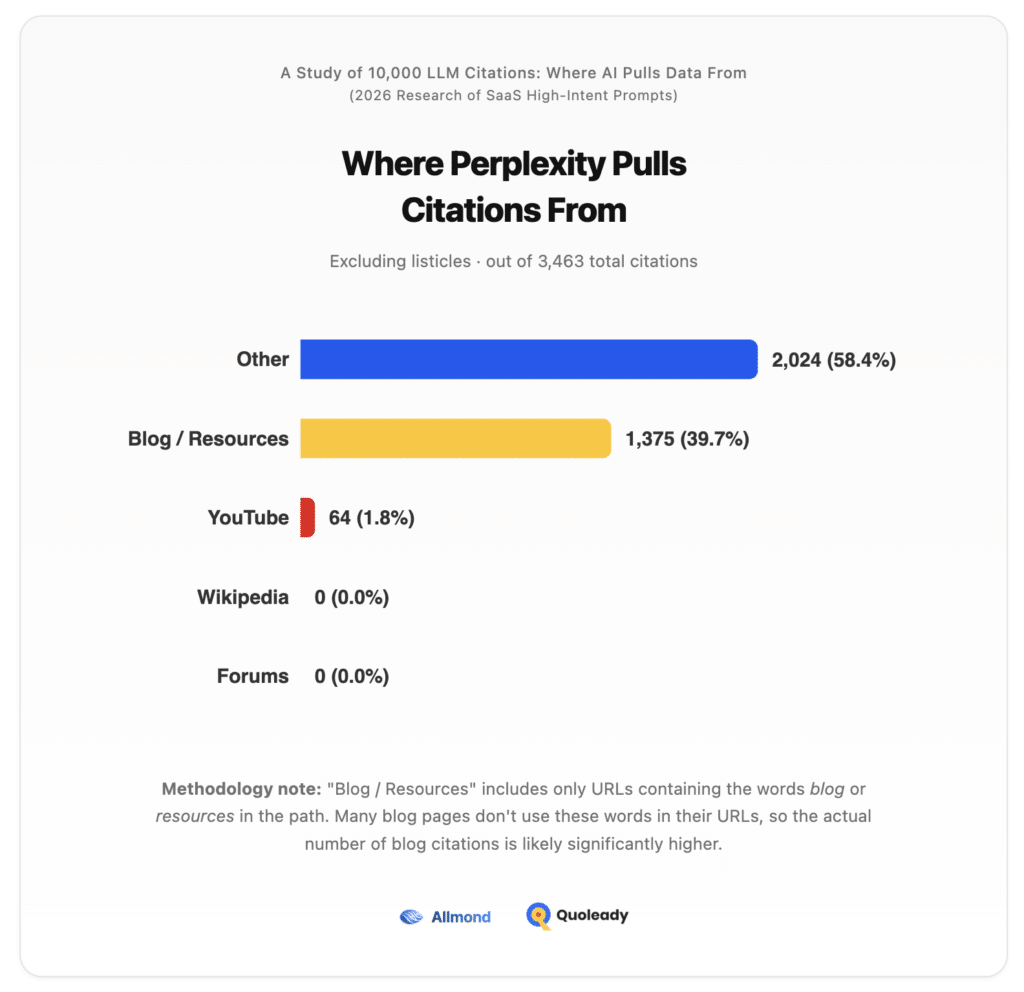
Perplexity is the only model that cites YouTube with any regularity (64 citations) and has the strongest blog/resource citation rate after Gemini.
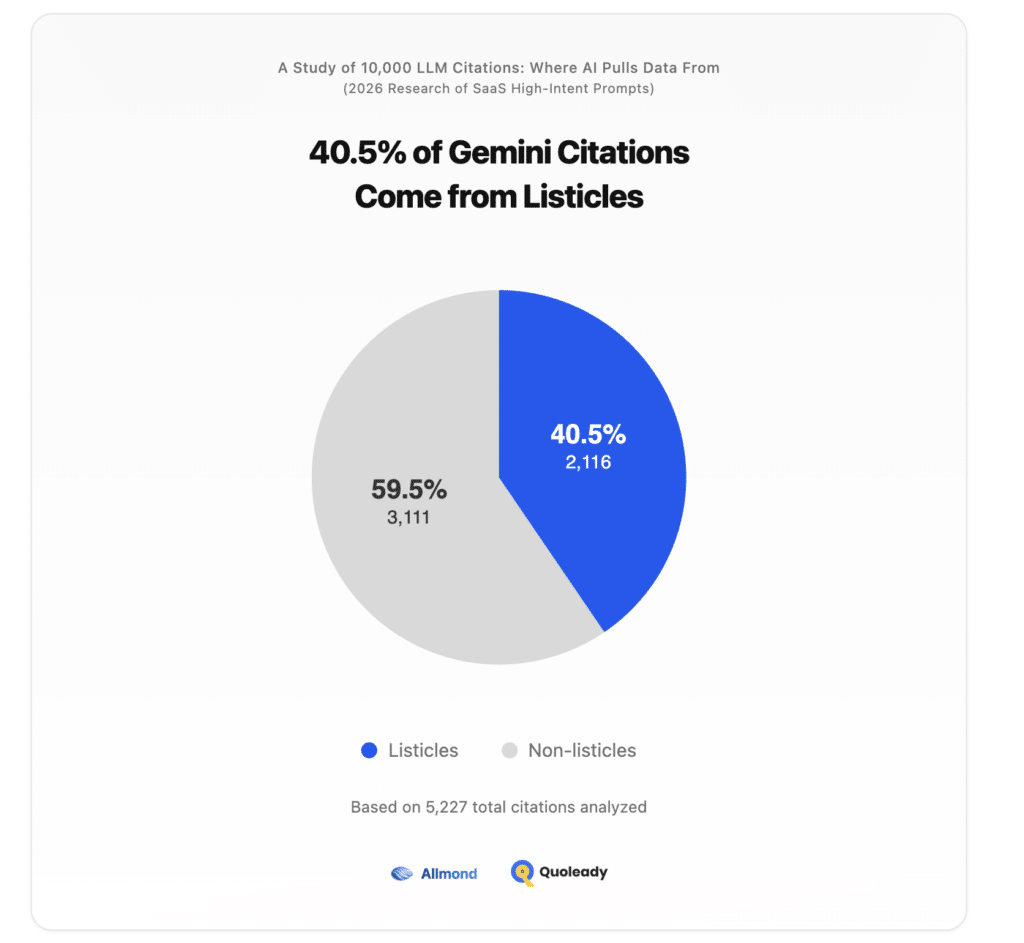
Gemini has the lowest listicle reliance at 40.5% but produces the most citations overall. It draws from a more diverse set of sources than other models.
What this means for SaaS:
Gemini rewards diverse content strategies. While listicles still matter, having strong blog content, documentation, and web presence gives you more pathways into Gemini’s citations.
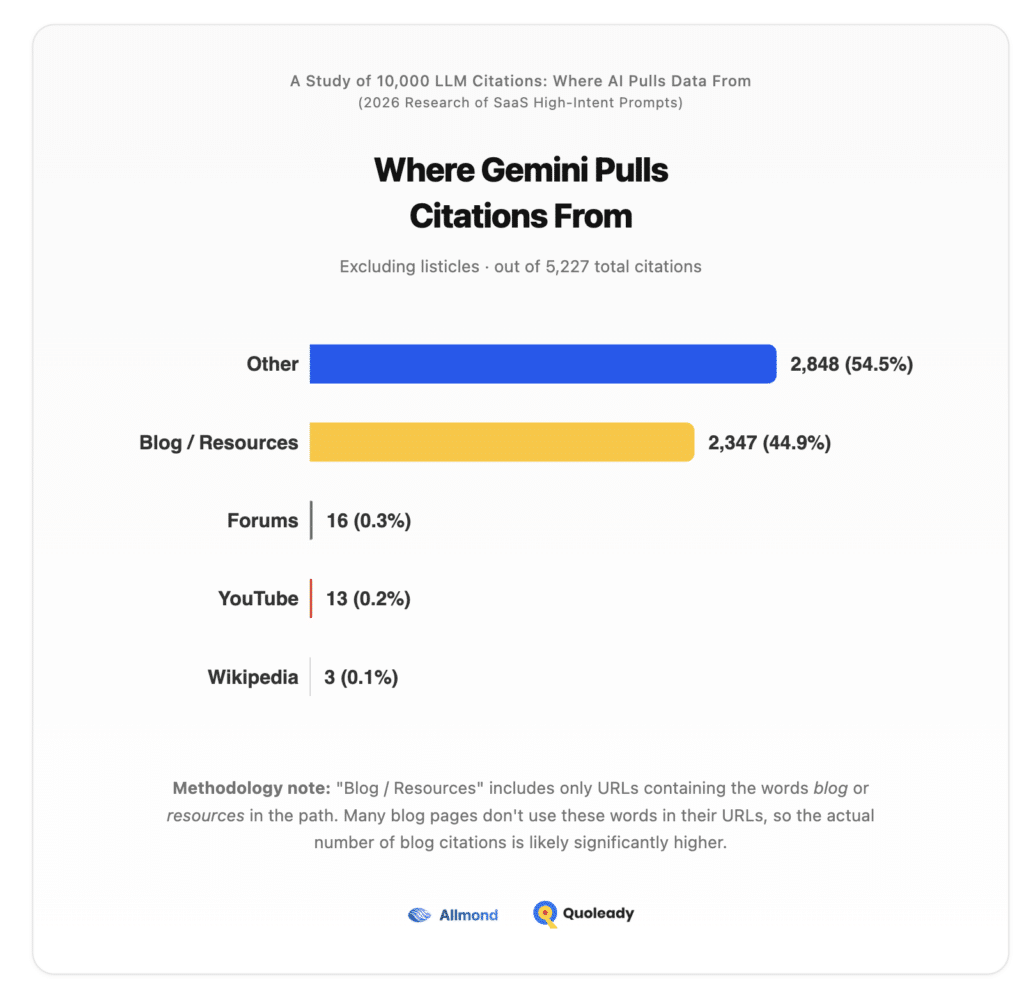
Gemini leads in blog citations (44.9%) and is the only model besides ChatGPT to cite Wikipedia. Its source diversity makes it the most accessible model for multi-format content strategies.
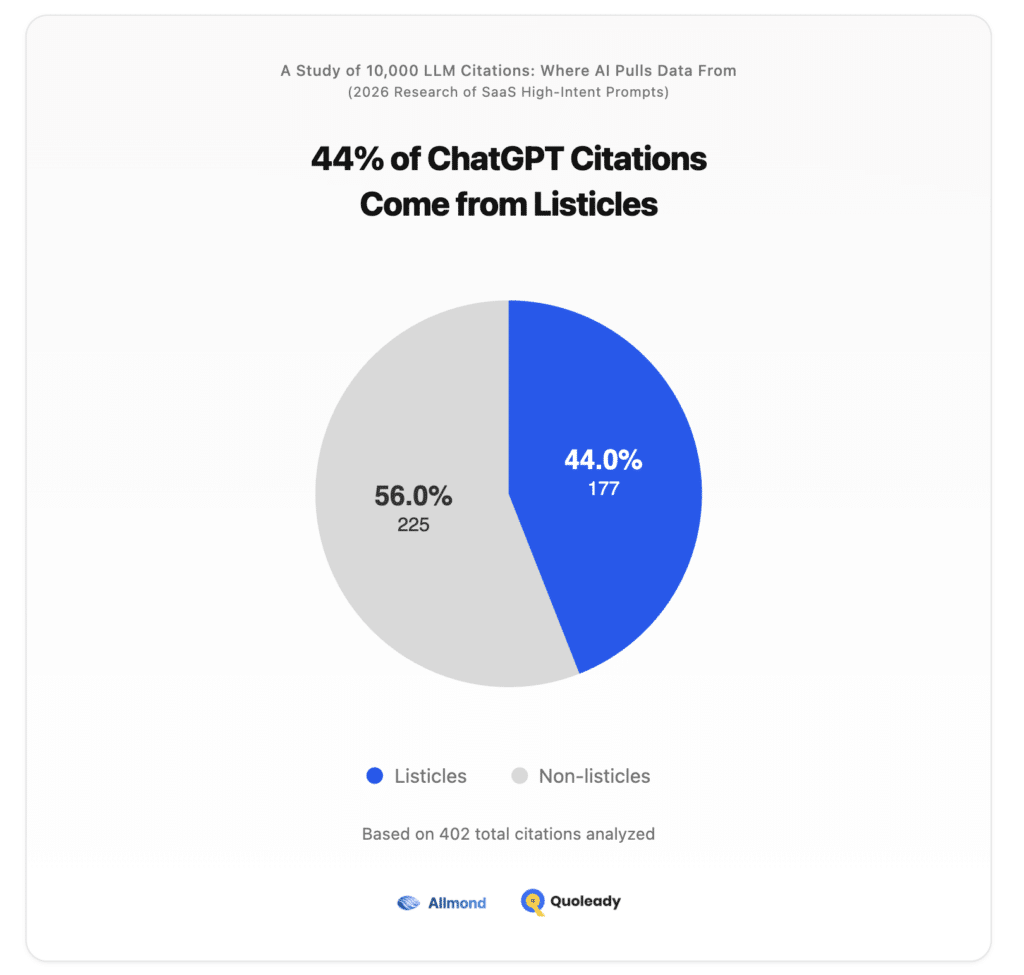
ChatGPT cites listicles 44% of the time — middle of the pack. However, it produces far fewer citations overall (402 total), making each citation placement more competitive.
What this means for SaaS:
ChatGPT has the smallest citation footprint but the largest user base. Every citation slot is high-value.
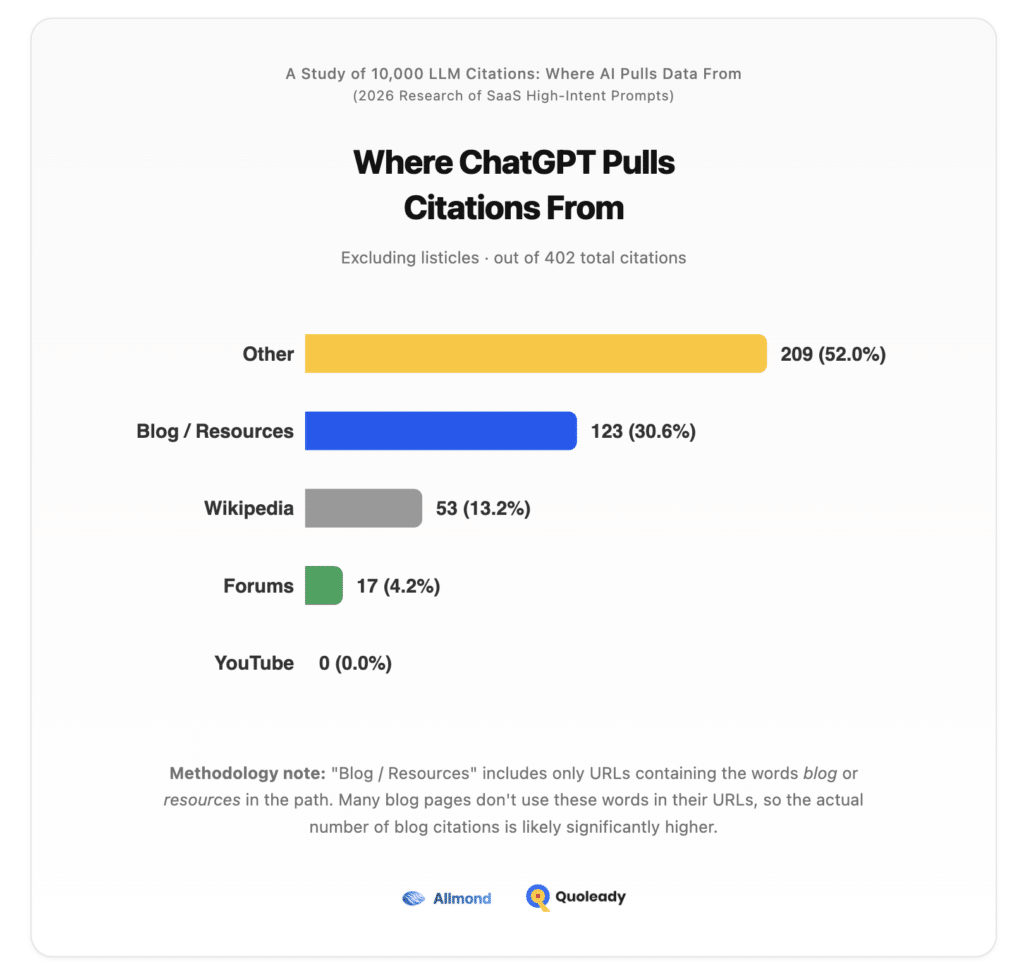
ChatGPT is the only model that meaningfully cites Wikipedia (53 citations, 13.2%). It also cites forums more than other models, suggesting it values diverse, community-sourced information.
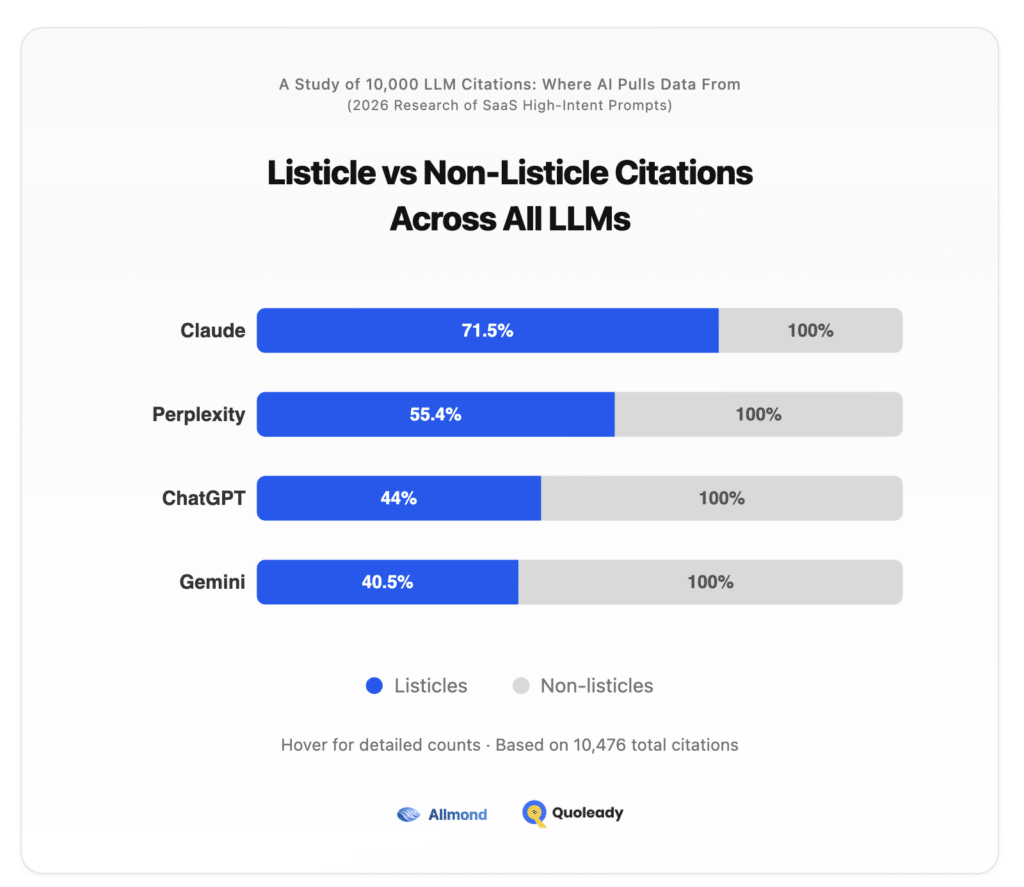
Listicles dominate across every model — Claude relies on them most (71.5%), while Gemini is the least dependent (40.5%). No matter the LLM, getting featured on listicle pages is the single most impactful way to earn citations.
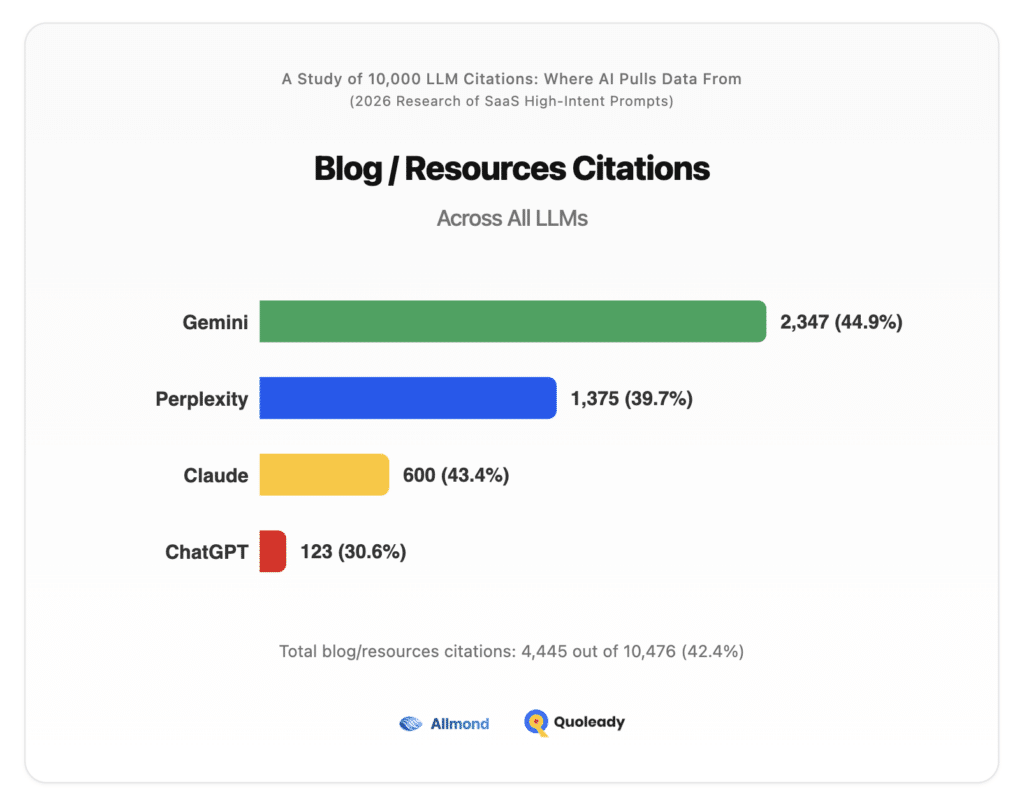
Blog and resource pages are the largest citation source. Gemini leads with 2,347 blog citations (44.9% of its total), while ChatGPT pulls the fewest at just 123. Consistent, high-quality blog content pays off — especially for Gemini and Perplexity visibility.
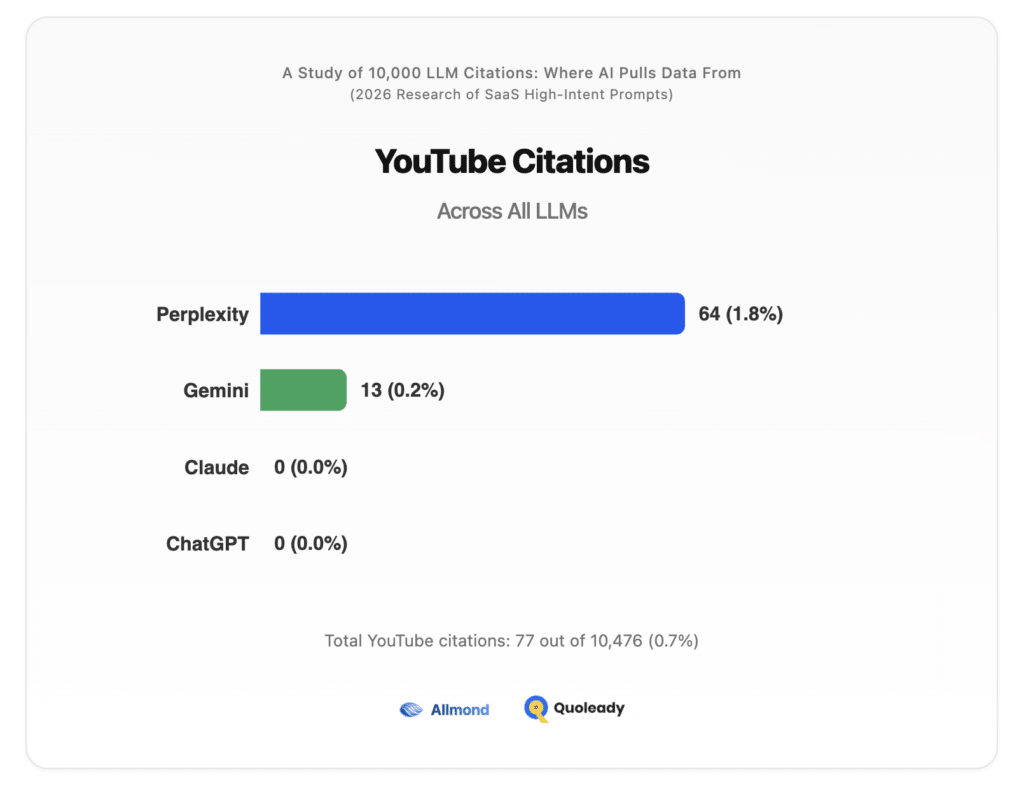
YouTube is almost invisible as a citation source — only 77 citations total (0.7%). Perplexity is the only model that meaningfully surfaces YouTube content. For SaaS companies, video alone won’t drive AI visibility.
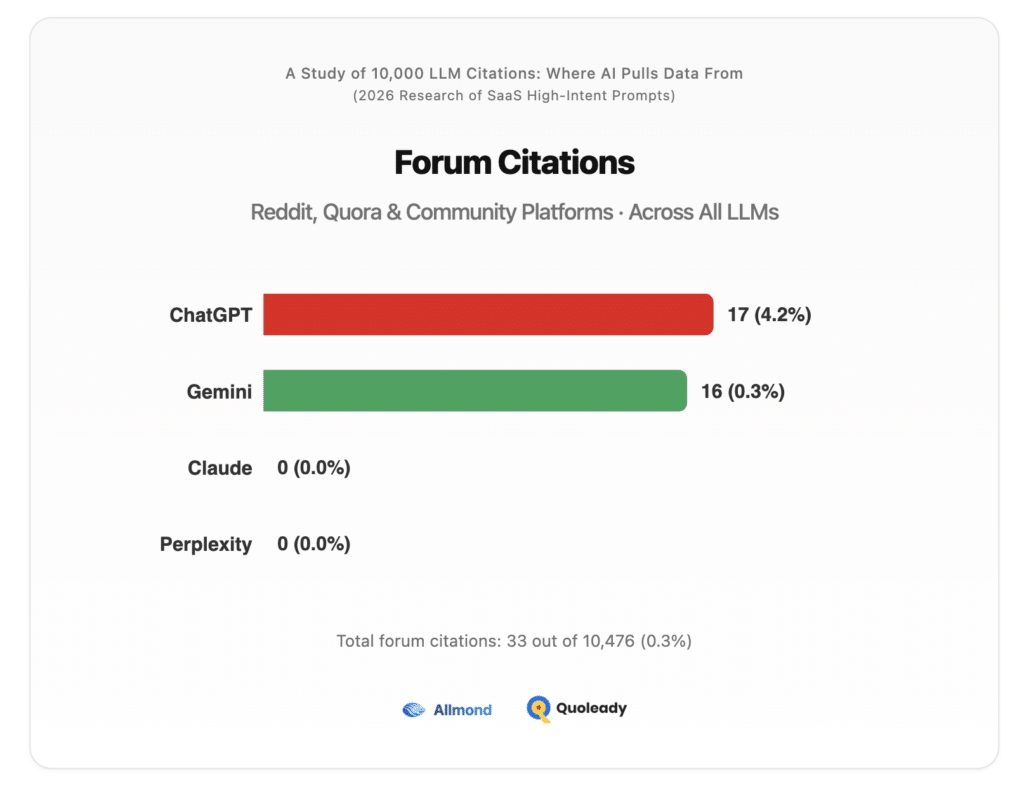
Forum content (Reddit, Quora, etc.) accounts for just 33 citations across all models (0.3%). Despite being rich in authentic user opinions, community platforms are nearly invisible to LLMs when generating SaaS recommendations.
1. Listicles are the #1 citation source across every LLM.
40–72% of citations come from listicle pages. If you’re not on listicles, you’re not in AI answers. Invest in listicle placements — create them, pitch them, sponsor them.
2. Blog content is the most important channel.
30–45% of citations come from blog pages. Publish detailed comparison posts and category overviews that position your product alongside competitors.
3. Traditional SEO sources (Wikipedia, YouTube, forums) barely matter.
These sources account for less than 2% of citations combined. Don’t rely too much on them for AI visibility.
4. Different models need different strategies.
Claude is almost entirely listicle-driven. Gemini rewards diverse content. Perplexity bridges search and AI. ChatGPT has few but high-value citation slots.
5. “Alternatives” queries are the highest-leverage opportunity.
70% of “alternatives to X” citations come from listicles. If competitors’ users are exploring options, you need to be on those pages.
Book a call and let’s discuss how to get your product cited by AI models.
Olga Mykhoparkina
Founder, CEO
Read also


At Quoleady, we’ve worked with more than 200 B2B SaaS companies, from early-stage startups to
Olga Mykhoparkina
Jul 10, 2026
I often see teams paying for 15–20 different marketing tools while still struggling to publish con
Olga Mykhoparkina
Jun 30, 2026
High-quality content can help you improve your brand authority, increase traffic, attract leads and

Ardak Yeshniyazova
Jun 15, 2026 Let us know what you are looking to accomplish.
We’ll give you a clear direction of how to get there.
All consultations are free 🔥