Jessica Harris
Partnership Manager Expert at Adsy.com

Jessica Harris
Dec 19, 2025If you’ve spent the last decade learning how to keep up with Google’s updates, the new wave of AI search brings both good news and bad news.
So, your job these days is not to rank in search engines alone. Now, you have to earn LLM visibility and become citable. In other words, make your content the kind of source AI models naturally want to pick.
How do you do that? We’re about to explain it in detail in this guide.
LLM SEO is the practice of making your content findable and citable by AI search engines. But the real difference lies in the tactics and priorities you need to change compared to traditional SEO.
When it comes to the usual search engines, you mainly optimize for keywords and SERP intent. In LLM search, you optimize for:
None of these will hurt your “normal” optimization, though. After all, a clear structure and better brand visibility will only benefit SEO, right? So, it isn’t an LLM vs. SEO battle. These are just two different approaches that are still interconnected.
Let’s run a simple experiment to understand how LLM “algorithms” differ from traditional optimization. We asked ChatGPT to give us some “web design agency” suggestions.
This is what we got:
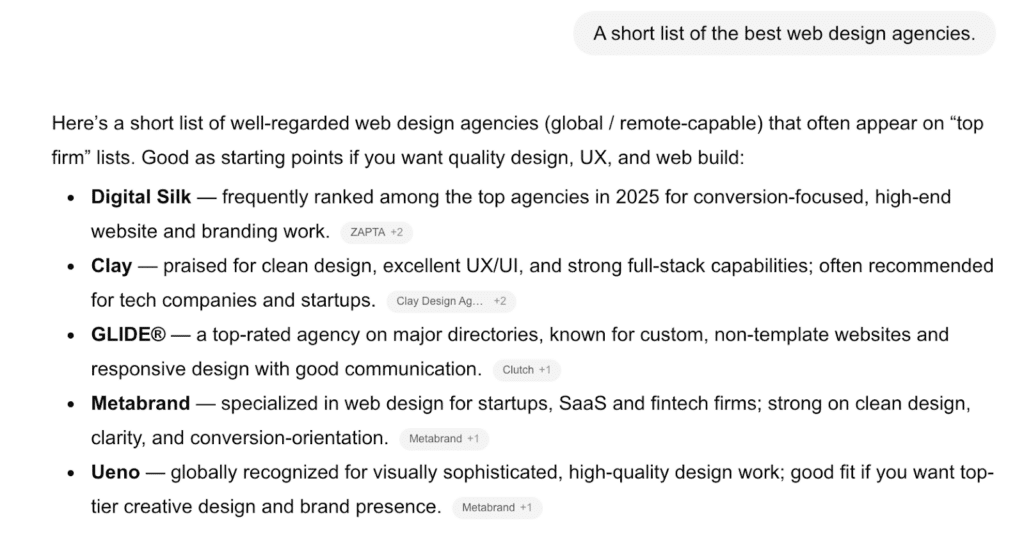
Now, let’s check whether these brands quoted by ChatGPT are actually ranking well for the keyword “web design agency”.
Note: We’ve used Semrush and the US region for this. So, the results might differ a bit with a different setup. But they will still be similar.
The first two brands rank in positions #1 and #10. Awesome, this makes total sense.
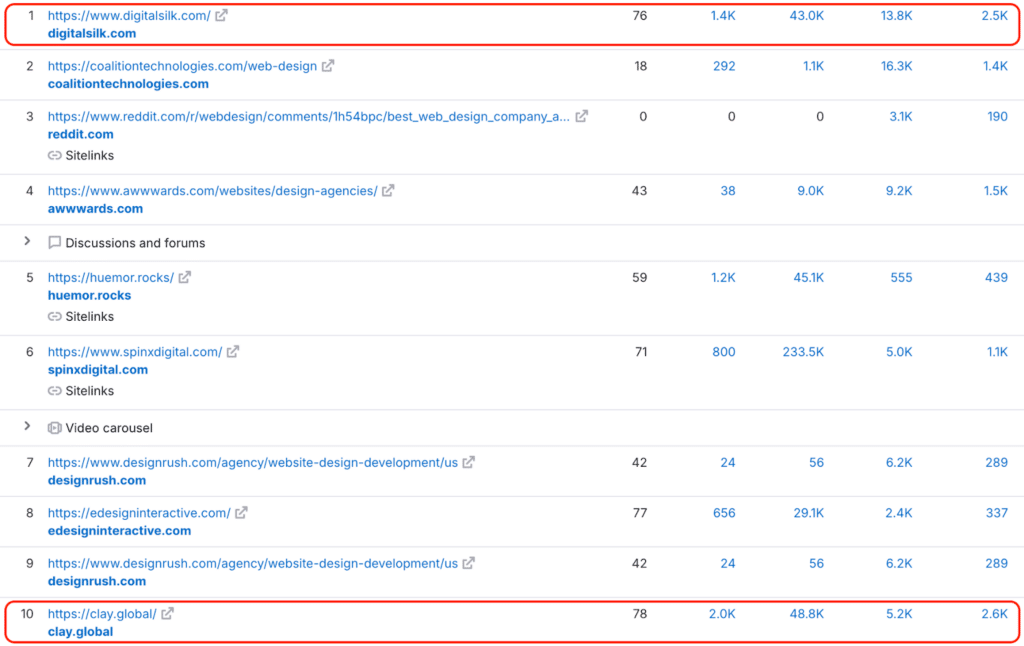
But what about the rest? This is where it gets interesting.
One brand ranks in position #78 (!). This means that it’s basically invisible in SERPs: pretty much no one goes beyond the second page of search when googling.

But wait for it. It gets better than that. The two other brands aren’t even in the top 100 of SERPs. Moreover, one of those websites literally has no organic keywords except for their brand name.
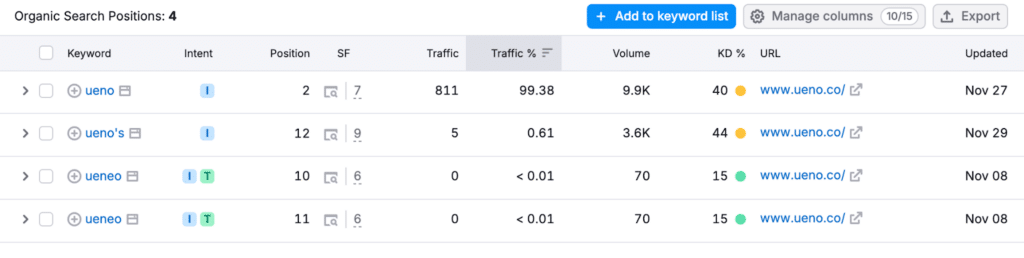
And the other one only ranks for branding-related keywords.
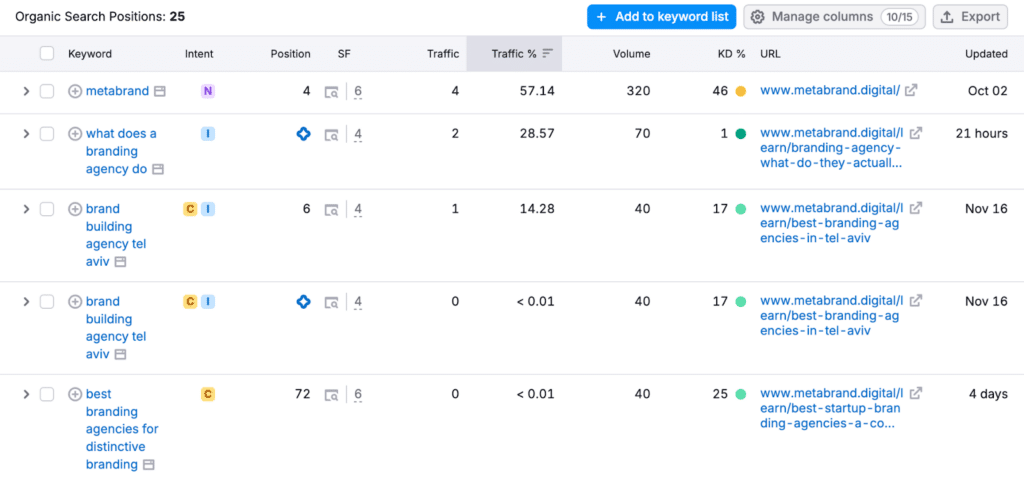
So, how, in the world, did ChatGPT find them? And why did it decide to recommend them?
We’ll get into the exact tactics in the next section. But here is a quick answer to satisfy your curiosity. Both of these brands have 7K+ backlinks. And many of them come from articles like “X Best Web Design Agencies”.
That’s why, when assessing your link-building strategy next time, you might consider getting some link exchanges for listicles like that. And even if you can’t get an exchange deal, sponsored blog posts where your brand pays a fee could also work, as long as the content is high-quality.
To sum all this up, you can already take note that LLMs often pay more attention to:
Now, let’s explore the strategy we’ve tested across multiple websites, which consistently earned citations in AI results. All you need is 6 steps.
Here, you have to combine technical SEO best practices and LLM optimization. A few non-negotiables for that are: site and content structure and schema.
Why is this a must? Because LLMs hate chaotic layouts. All they demand from you is clarity. So, make sure that your:
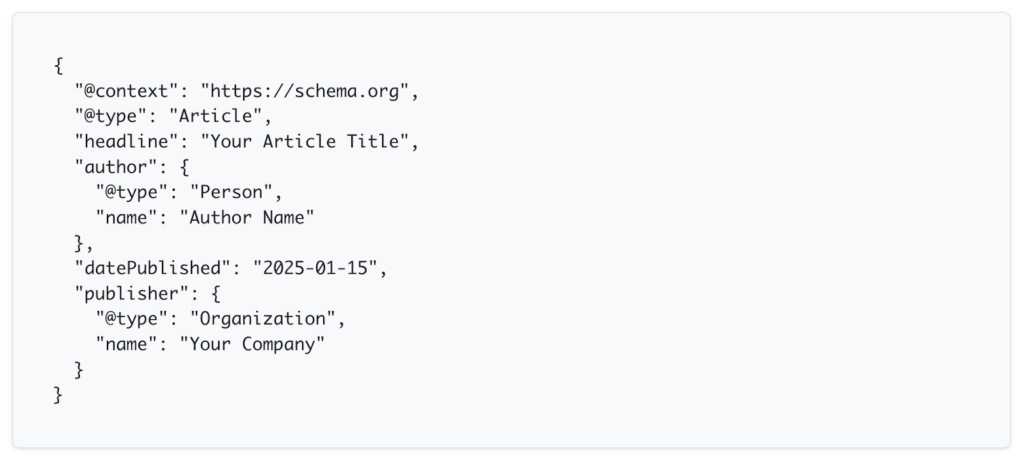
LLMs love structured data because it makes everything…clear (yes, again). So, it’s a good idea to add:
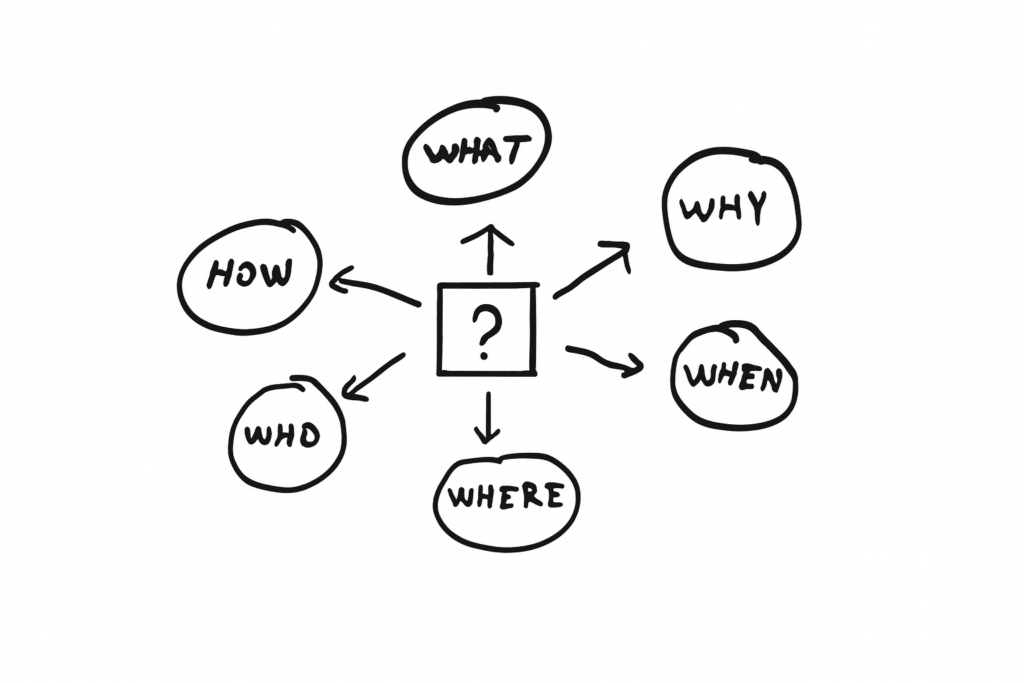
The biggest mistake people still make is assuming that the phrases users type into Google are the same as what they ask ChatGPT or Perplexity. Well, surprise-surprise, they aren’t:
Let’s take a look at the actual example.
That’s the real shift you must acknowledge. There is no reason to chase awkward keyword stems anymore. Instead, you want to understand how people think about your topic.
What could you do practically?
Keep targeting your usual search queries based on the volume and keyword difficulty that works for your domain authority, but also do this:
Most people write with Google in mind, which means they care about ranking positions. But LLMs don’t care much about that (we’ve already seen this in our “web design agency” example). They look for content that is complete, trustworthy, and usable.
We’ve already touched on making your long-form pieces more practical and usable by answering more questions related to your topic. But there is more to that.
When writing blog posts, try to always add at least some of these elements:

If you add at least one of these to every post you publish, you have a much better chance of getting into AI Overviews and other AI search results.
Who are we even writing for these days? Search engines, LLMs, or our readers? That’s a good question. Ideally, we should be writing for all of them. While it sounds like “mission impossible,” it isn’t that hard. And you’ll see why.
Writing “AI-friendly” content is mostly about little things that will benefit your overall SEO and make your copy clearer for visitors. Here is what you could do:
LLMs look beyond just your website to determine how credible you are. So, off-page SEO matters even more now for LLM visibility. If you remember the example we’ve seen in the beginning, most of the brand recommendations we got from ChatGPT didn’t have high DA/DR or top rankings in SERPs. Instead, they had lots of links. What could these be?
If your brand is mentioned across trusted sources, LLMs treat you as someone they can trust. But how do you get all those brand mentions? While there are many link-building tips, you should always start with a strategy:
From there, you’ll only need to find proper tools and backlink services that can make this process easier. And over time, you’ll see how your overall brand exposure helps improve your LLM rankings.
This is the single most important part of LLM optimization, and the one most of us underestimate.
LLMs don’t need a 1,500-word paraphrase of what’s already on the first page of Google. Why? They were trained on that. They already know it. What they want (and what they cite) is information that came from a human who has actually done the work.
Your content should reflect your true experience:
Give super-specific examples, provide screenshots, and the weird little nuances that no generic guide mentions. If you want your articles cited, give the model something it can’t find anywhere else. Be the person who brings new angles, new questions, and new thoughts.
Let’s look at some pieces that show up in AI-generated answers, and understand why.
First, we have an article titled Indirect distribution channels explained with examples that made it to AIOs.
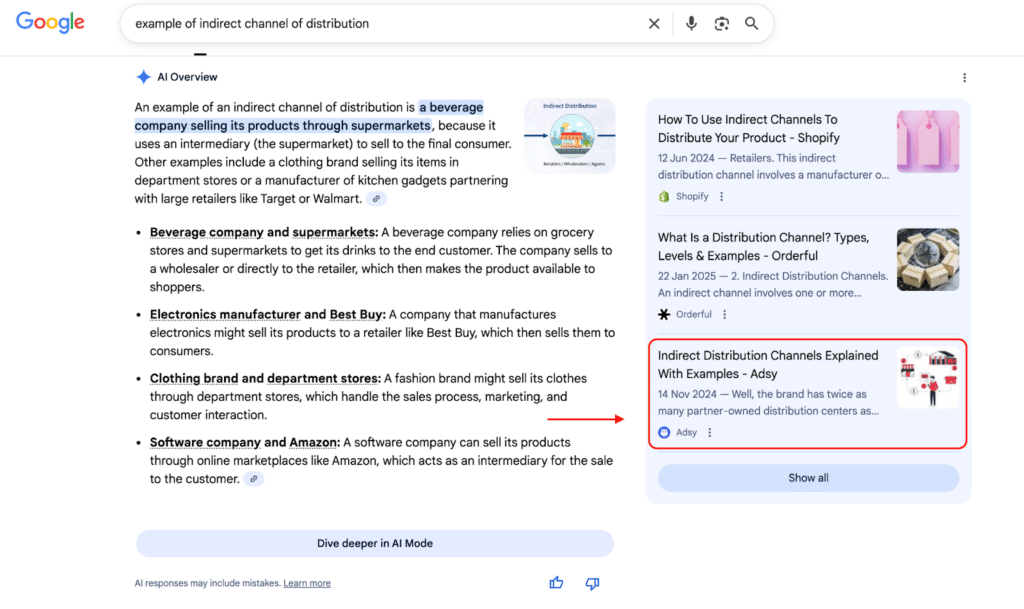
Why was it cited? There are at least 3 good reasons for that:
The next example is an article on Google alternatives.
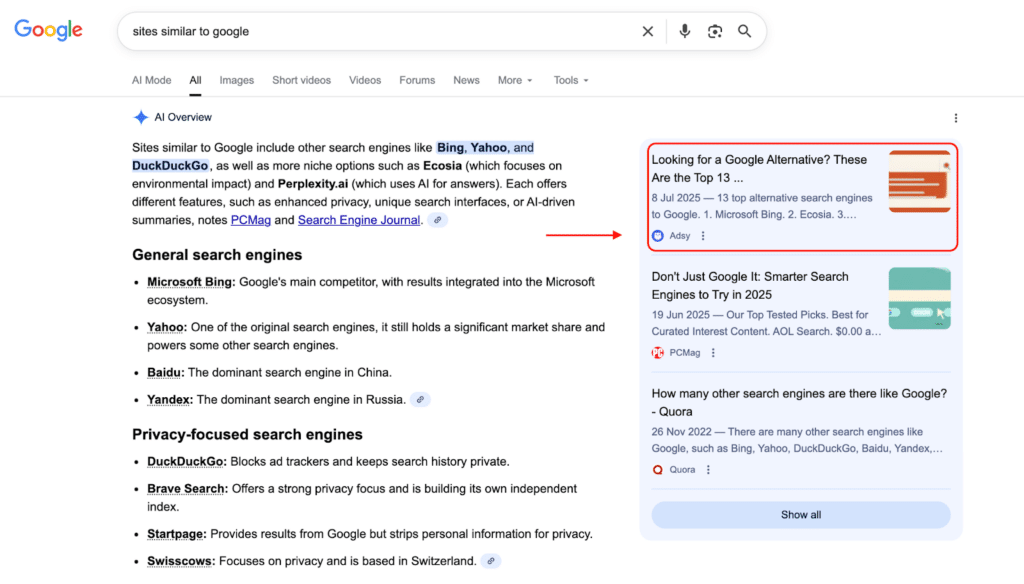
Here are the reasons why this one has worked:
The structure is clean and understandable for both humans and AI.
It’s a listicle, and it’s something that LLMs like, as we’ve already seen.
You get a detailed description of each tool with unique features and best use cases.
Here comes the research titled How much should you pay for a guest post [We analyzed 37,542 websites].
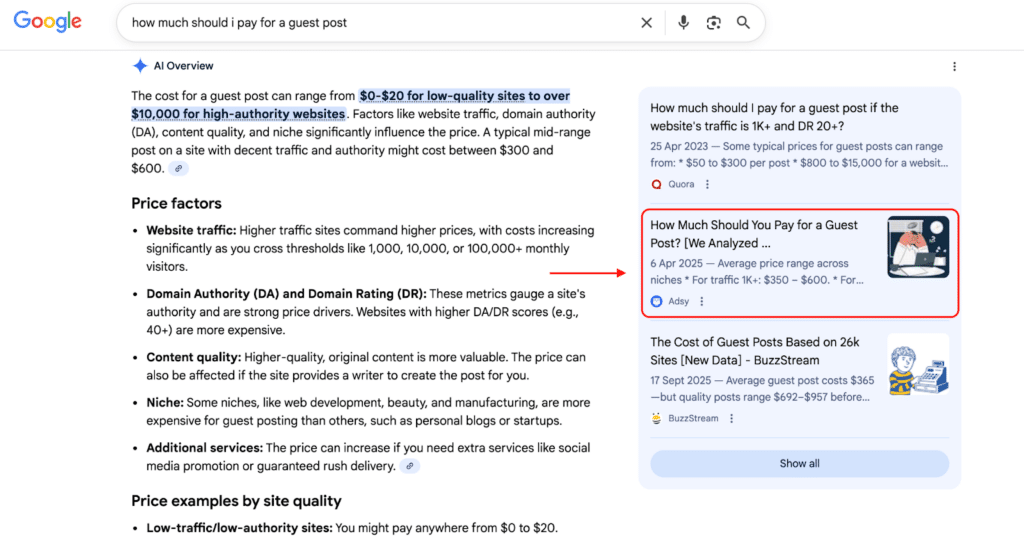
There was no doubt that this guide would end up in AIOs. Why? Because:
You can safely say that traditional optimization was about rankings, while LLM SEO is about being chosen as a reliable source. Now, you’re competing for trust.
The path to earning AI visibility is not as hard as it may seem. But it requires you to be intentional. Be generous with your knowledge and transparent with your experience, and you’ll get there.
Jessica Harris
Partnership Manager Expert at Adsy.com
Read also



Finding a top-notch SaaS marketing agency to help you achieve your business goals can take time and

Olga Mykhoparkina
Apr 01, 2026
B2B buyers have been using AI tools to research software for a while now. ChatGPT, Perplexity, Googl
Olga Mykhoparkina
Mar 30, 2026
We spent several days (and quite a few AI credits) scanning hundreds of high-intent SaaS prompts acr
Olga Mykhoparkina
Mar 05, 2026 Let us know what you are looking to accomplish.
We’ll give you a clear direction of how to get there.
All consultations are free 🔥