Olga Mykhoparkina
Founder, CEO

Olga Mykhoparkina
Mar 30, 2026B2B buyers have been using AI tools to research software for a while now. ChatGPT, Perplexity, Google Gemini aren’t new, and neither is the idea that showing up in their answers matters for SaaS companies.
What has shifted is the level of seriousness around it. Twelve months ago, most SaaS marketing teams knew AI search was something to keep an eye on. Now it’s in the budget conversation. It’s in the agency brief. It’s the thing a VP of Marketing brings up on a strategy call because their CEO just asked about it.
As a result, a flood of agencies are claiming to specialize in AI SEO.
Some of them have genuinely adapted how they work by building AI visibility into their strategies, tracking prompt appearances, placing clients in the sources AI tools actually reference. Others updated their website copy and called it a pivot.
Over the past few weeks, I spent time looking at who’s actually doing meaningful work in this space. I looked at methodologies, client results, and whether agencies could demonstrate real AI visibility for the brands they work with.
This list is what came out of that process.
I want to be upfront about how I put this list together, because “AI SEO agency” has become a label a lot of people are slapping on existing services right now.
Here’s what I actually looked for:
Experience with B2B SaaS:
Genuine understanding of AI search behavior:
Approach to content and authority:
Proof of visibility in AI tools:
Strategic thinking beyond “publish more content”:
Clear, honest positioning:
The agencies on this list passed most of these criteria. None of them are perfect, and I’ll note where I see limitations, but all of them are worth a serious look if AI search visibility is a priority for your team.
Quoleady is a B2B SaaS SEO and content agency that’s been helping software companies grow their organic presence for more than five years. The team works almost exclusively with SaaS and B2B tech companies, building content programs designed to drive sign-ups, pipeline, and long-term category visibility. Today, they operate with a distributed team of 30+ specialists across 10+ countries and have worked with more than 200 SaaS brands, including PandaDoc, Monday.com, and Expandi.
Quoleady’s approach naturally aligns with AI search optimization because it focuses heavily on entity authority, category depth, and brand credibility across the web. Their work combines traditional SEO with LLM optimization (LLMO), helping SaaS brands show up not just on Google, but inside AI-generated answers across platforms like ChatGPT, Perplexity, Gemini, and Google AI Overviews.
Because the agency specializes entirely in B2B SaaS, the strategies are tailored to how SaaS buyers research and compare tools, which is exactly the type of behavior AI search now shapes.
Deep SaaS specialization is the biggest advantage here. Because Quoleady works exclusively with B2B software companies, the content and strategy tend to reflect real category expertise, which is increasingly important for AI citations. After working with 200+ SaaS companies, the team also has strong pattern recognition around what actually drives sign-ups and product adoption from organic channels.
Their specialization is also their biggest constraint. Quoleady isn’t designed for ecommerce brands, local SEO campaigns, or consumer products. If you’re outside the B2B SaaS ecosystem, you’ll probably want an agency with a broader focus.
Growth-stage and established B2B SaaS companies that want a partner who understands both traditional SEO fundamentals and emerging AI visibility.
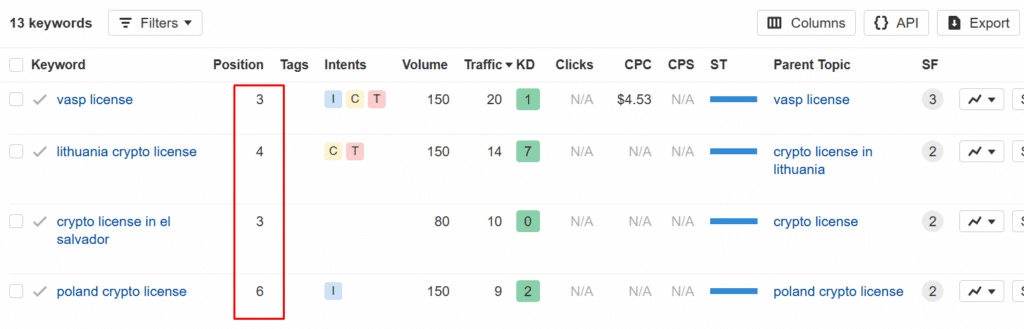
Helped LegalNodes reach #1 organic position (just beneath the AI Overview) within 24 hours of going live with one article. Four other articles secured top 10 organic rankings. You can read the fullLLMO case study here.
Embarque is a performance-focused SEO and AI search agency led by Jules Canlas. They help scaling companies (SaaS, HealthTech, FinTech, EdTech, LegalTech, marketplaces) turn organic search into a measurable revenue channel. Clients include VEED, Riverside, MentorCruise, SignWell, and Klap.
Early adopters of AI search optimization, Embarque focuses on making content citation-ready for platforms like ChatGPT, Perplexity, and Gemini. They test hundreds of prompts per client to track where brands appear, and where they don’t.
Strong measurement infrastructure that ties AI visibility directly to revenue. Transparent about timelines and realistic expectations.
Broad industry focus may limit deep specialization in SaaS compared to niche agencies.
Tech and SaaS companies that want a data-driven AI search partner with strong visibility tracking.
Teams looking specifically for deep B2B SaaS specialization or agencies focused on paid demand generation.
First Page Sage is a San Francisco–based SEO and Answer Engine Optimization (AEO) agency founded in 2009. They specialize in B2B lead generation via thought leadership and long-term SEO. Clients include Salesforce, Okta, Microsoft, Cadence Design Systems, Verisign, and SoFi.
They build category authority through original thought leadership, aligning with how LLMs rank credible sources. Their Generative Engine Optimization (GEO) framework creates content that shapes AI answers while influencing decision-makers.
15+ years of B2B SEO experience; thought leadership approach naturally aligns with AI credibility. Known for detailed ROI reporting.
Premium pricing ($8K–$20K+/month) and intensive onboarding requiring substantial client SME input.
Established B2B SaaS or enterprise companies with clear positioning and internal expertise to contribute to thought leadership.
Early-stage startups or teams looking for fast execution without heavy strategic collaboration.
iPullRank is a New York–based SEO and content strategy agency founded by Mike King. They work with enterprise brands across finance, technology, media, and ecommerce, including SAP, American Express, HSBC, and Zillow.
Using their “Relevance Engineering” framework, iPullRank applies technical SEO, knowledge graphs, and machine learning principles to improve brand visibility in both traditional search and AI-driven discovery.
Unmatched technical depth for large, complex sites; infrastructure-level SEO expertise.
Enterprise-focused pricing and processes that are designed for large organizations with complex digital environments.
Enterprise SaaS and technology companies with large sites and significant technical SEO needs.
Early-stage startups or smaller SaaS companies looking primarily for content-led growth.
Avenue Z is a New York-based AI optimization agency that blends digital PR, SEO, and content strategy to help brands build visibility across both traditional search engines and generative AI platforms. They work across industries including FinTech, B2B SaaS, emerging tech, HealthTech, and venture-backed startups. Clients include companies like Acorns, Better, Dave, and e2open.
Avenue Z approaches AI visibility through a PR-first lens. Their strategy focuses on getting brands mentioned in authoritative media sources, on which LLMs rely on when building training data and retrieving citations.
Their strongest advantage is the integration of PR and SEO. Since AI systems often reference authoritative editorial sources, building media coverage can significantly improve citation likelihood.
Because Avenue Z works across multiple verticals, including FinTech, HealthTech, DTC, and SaaS, their B2B SaaS specialization may be less deep than agencies focused exclusively on that category.
Brands that want to build authority and AI visibility through media coverage and PR.
Companies looking primarily for high-volume content production or deep SaaS content expertise.
Toopixels is a digital marketing agency that has recently expanded into AI search optimization. Their service is designed to help brands get recognized, cited, and surfaced across AI platforms like ChatGPT, Gemini, and Perplexity. The agency focuses on companies that already produce strong content but struggle to get cited by AI tools.
Toopixels takes a practical, step-by-step approach to AI search optimization. They start with a full audit of a brand’s visibility across both traditional search and AI answers, then work through improvements to content structure, schema, and authority signals that influence LLM recommendations.
They’re particularly good at breaking down AI search concepts into practical steps for marketing teams. Their structured approach makes them a good entry point for companies just starting to explore AI search optimization.
Toopixels is a smaller and more generalist agency compared with others on this list. Their AI optimization offering is relatively new, and publicly available case studies specific to AI visibility are still limited.
Small to mid-sized businesses looking for a practical introduction to AI search optimization without a large agency engagement.
Enterprise SaaS companies with complex SEO environments or teams looking for deep SaaS specialization.
A lot of people assume AI search works like Google. They think there’s some kind of ranking system and you’re trying to move your page up the results.
That’s not how it works.
Unlike Google, ChatGPT doesn’t constantly crawl the web and maintain a live index of pages (unless you’re using a browsing-enabled version). The base model was trained on a massive snapshot of the internet like blog posts, documentation, review sites, forums, research papers, and a lot more.
When someone asks a question, the model generates an answer based on patterns it learned during that training process.
Newer versions also use retrieval-augmented generation (RAG). In simple terms, that means the model can pull in relevant external sources at the moment a question is asked, almost like doing a quick reference check before responding. You can learn more about howretrieval-augmented generation (RAG) impacts AI recommendations and what SaaS marketers should do to stay ahead.
ChatGPT synthesizes answers. Brands, tools, and sources that show up in those answers tend to be the ones the model has encountered repeatedly across credible, well-structured content. Over time, it learns to associate certain companies with certain categories, use cases, or problems.
So if your product consistently appears in discussions about a particular topic across trusted sources, the model is far more likely to mention your brand when someone asks about that topic.
So “showing up” usually means your brand gets mentioned when someone asks something like:
That kind of visibility generally comes down to three things:
If your brand shows up consistently in discussions about a particular problem space, the model starts to treat you as a natural example when that topic comes up.
You might be interested inA Study of 10,000 LLM Citations: Where AI Pulls Data From (SaaS High-Intent Prompts)
Technical SEO still matters. Crawlability and indexation determine whether your content gets discovered, while page speed and mobile experience affect performance in search and user engagement.
E-E-A-T also plays a role here. Clear authorship, expertise, and credible content make it easier for AI systems to trust what they’re seeing.
If your site has thin content, very few authoritative mentions, and almost no presence outside your own domain, AI systems don’t have enough signal to treat you as a trusted source.
Where classic SEO starts to fall short is in how content is written. A lot of SEO content is built to rank for a keyword. It’s structured around search queries and optimized for Google’s signals.
But large language models don’t think in keywords.
They look for content that explains things clearly, compares options, and adds context. Content that’s easy to understand and easy to reuse in an answer.
That doesn’t mean you need a completely different type of content. The fundamentals are the same. What changes is the priority.
Instead of writing primarily to rank, you’re writing so your content can be quoted, summarized, and referenced when someone asks a relevant question.
That also means your presence can’t live only on your own site. You need to show up across third-party articles, review platforms, and industry content. That’s what gives AI systems enough confidence to mention you when it matters.
The B2B SaaS buying journey has always been research-heavy. Buyers take their time comparing tools, reading reviews, and asking peers for input. In many cases, this process stretches over several weeks before any conversation with a sales team begins.
What’s changing is where that research starts.
AI-driven search platforms like ChatGPT are becoming a common starting point for research, which means traditional SEO alone is no longer enough for visibility.
AI tools provide quick, synthesized answers, often summarizing multiple sources into a single response. As a result, many brands are left out of these answers because their content does not align with how AI systems evaluate and select information.
According to a study by Bain & Company, a significant portion of consumers now prefer AI chatbots over traditional search engines for certain tasks, particularly when they want fast, summarized insights. This trend is especially pronounced among experienced and time-constrained decision-makers who value efficiency in early-stage research.
In practical terms, AI-generated responses are shaping the earliest phase of the buying journey. This is the stage where potential customers are identifying the type of solution they need, exploring available vendors, and forming initial impressions of credibility.
When a product appears consistently in these AI-generated answers, it often secures a place on the buyer’s shortlist before formal evaluation even begins. On the other hand, brands that are absent from these responses may only enter consideration later, when preferences have already started to form based on earlier AI recommendations.
Another important point is that visibility in AI search does not always correlate with traditional SEO performance. A company may rank well and generate steady traffic, yet still fail to appear in AI responses if it lacks the right signals across the sources these systems rely on.
At the same time, a competitor with less organic traffic but stronger presence in AI-generated answers can gain a meaningful advantage. By consistently appearing in relevant responses, they capture early attention and influence perception at a critical stage.
Over time, this advantage tends to build. Buyers who discover a solution through an AI recommendation often treat it as a trusted starting point. They are less likely to explore a wide range of alternatives, which makes it increasingly difficult for other vendors to break into consideration later in the process.
Traditional SEO agencies focus on rankings. AI search optimization agencies focus on getting your brand recommended. This changes how everything is approached.
Instead of chasing the top spot for a keyword, the goal is to make sure AI tools mention your company when users ask relevant questions.
In practice, this starts with content. The emphasis is on clear, structured, and specific information that AI models can easily understand and reference. Content that explains concepts, compares options, and gives direct answers tends to perform better than generic or overly cautious writing.
Brand presence also plays a bigger role. Your company should be mentioned across credible sources. Reviews, comparisons, and industry roundups all help build the signals that AI systems rely on.
Technical SEO still supports everything. A well-structured site, strong internal linking, and proper indexing make it easier for both search engines and AI models to interpret your content.
Finally, strong agencies track how brands appear inside AI answers. They test real prompts, monitor mentions, and adjust strategy based on what shows up. This allows them to improve visibility faster, without waiting months for traditional SEO results.
Traditional SEO agencies and AI-focused agencies may use similar tools, but their objectives are quite different.
A traditional SEO agency is centered on keywords, rankings, and organic traffic. The goal is to improve positions on Google and drive clicks to a website. This approach has been effective for years and still plays an important role today. However, it does not directly address whether a brand is recommended by AI systems.
AI search optimization agencies focus on visibility within AI-generated answers. Their aim is to get your brand mentioned when your target users ask relevant questions to LLM tools like ChatGPT for recommendations, comparisons, or solutions.
Many traditional SEO agencies find this transition challenging because their measurement frameworks rely heavily on metrics such as impressions, clicks, and rankings. These indicators do not fully capture what happens inside AI-generated responses. To understand performance in this space, agencies need to look at prompt-based testing, analyze how brands are mentioned, and review AI-generated answers directly.
Working with an agency focused on AI search often changes both planning and measurement. Content strategies move away from keyword clusters toward broader topic coverage and entity-level authority. Success is evaluated not only by traffic, but also by how often and how effectively a brand appears in AI responses.
This approach tends to take time, as it involves building a presence that AI systems recognize and trust. When done well, the result is consistent inclusion in the recommendations that shape early buying decisions.
The market for AI search optimization agencies is still very early. There are some genuinely smart teams doing interesting work.
But plenty of agencies have started adding “AI SEO” to their website without really changing how they operate. So if you’re evaluating partners in this space, it helps to know what to look for.
Here are a few things I’d pay attention to.
A simple way to test this is to ask them how tools like ChatGPT source information and decide what to include in answers. Ask what signals they believe influence whether a brand gets recommended.
If the explanation basically turns into a keyword strategy with a different label, that’s a sign they haven’t adapted their approach yet.
ChatGPT gets most of the attention right now, but it’s not the only place where AI-powered answers are happening. LLM tools like Perplexity, Gemini, and Claude aren’t much different. All these tools surface information slightly differently and have different user bases.
An agency that only focuses on one platform is probably leaving visibility gaps open.
AI powered content optimization still depends on strong SEO fundamentals. Your site needs clean architecture, proper indexation, and thoughtful internal linking so both search engines and AI powered tools can understand your content. The right agency should provide clear reporting on how your visibility in ChatGPT answers translates into real outcomes.
If an agency dismisses technical SEO as outdated or irrelevant, that’s a red flag.
Can they show examples of their clients appearing in AI answers for relevant prompts? Can they demonstrate that their own brand shows up when you ask tools like ChatGPT about AI SEO or AI search optimization?
Look for agencies that have a proven track record of delivering measurable growth for their clients in AI search visibility. If they can’t show that kind of visibility for themselves, it’s hard to trust they can deliver it for you.
Initial improvements in AI search visibility can typically be seen within 2-3 months, with significant changes appearing around 4-6 months. The companies building durable visibility right now aren’t treating SEO as a separate strategy. They’re doing both. The agencies worth working with understand that the old signals and the new signals reinforce each other.
For a long time, most discoveries happened on a Google results page. Now, more of those early questions are getting answered directly inside AI tools.
Yet the fundamentals haven’t changed. Content quality still matters. Domain authority still matters. Technical health still matters. Brand presence across the web still matters.
All of those things now need to be built with AI consumption in mind.
The companies that figure that out early will slowly build a visibility advantage that compounds over time. The ones that wait will eventually find themselves competing against companies that already dominate the recommendation layer in their category.
At Quoleady, we’ve been building toward the B2B SaaS companies we work with. We’re not the right fit for every company, but if you’re trying to understand how AI search fits into your growth strategy, it’s a conversation we’re always happy to have.
You canbook a strategy call today.
Olga Mykhoparkina
Founder, CEO
Read also


We spent several days (and quite a few AI credits) scanning hundreds of high-intent SaaS prompts acr
Olga Mykhoparkina
Mar 05, 2026
Search is evolving again. For years, G2 and Capterra were key platforms for SaaS discovery. Comparin

Simran Bharti
Mar 02, 2026
Have you seen those “SEO is dead” posts on LinkedIn?It feels like it comes back to life every ot
Olga Mykhoparkina
Feb 20, 2026 Let us know what you are looking to accomplish.
We’ll give you a clear direction of how to get there.
All consultations are free 🔥