Maja Volarević
Project Manager and Content Strategist
Maja Volarević
May 29, 2026An influencer marketing platform operating in the UAE and broader MENA region helps brands find, manage, and measure creator partnerships at scale.
Think AI-powered creator discovery, campaign management, and performance analytics, all in one place, built for a market that most global tools barely acknowledge.
We started working with them in October 2025. In the first three months we grew their branded search clicks from almost 0 to 213, more than doubled their organic users, and got them showing up in AI-generated search results for the first time.
The results have kept compounding since. Here’s how we did it.
The product was live and the team was growing, but the content and SEO side was basically untouched. Branded search was almost nonexistent. Organic traffic was modest.
And when it came to ChatGPT, Perplexity, Gemini, the platforms where more and more B2B buyers are researching tools these days, they simply weren’t there.
There was a lot to work with. A strong product, a genuinely differentiated regional angle, and a content slate that was starting from scratch.
The influencer marketing software space is competitive. Aspire, Influencity, Humanz, and others have been at it for years. In terms of AI visibility when we started, the market leader was sitting at roughly 75% average across LLMs.
Our client was at 2%.
So we weren’t going to out-volume the incumbents. We had to be smarter about where we played.
The MENA angle was the obvious bet. Most influencer marketing content, the “best platforms” roundups, the how-to guides, the comparison articles, is written entirely for US and European audiences.
A brand manager in Dubai or a startup founder in Riyadh searching for influencer software is being served content that barely acknowledges they exist.
That’s a gap. And gaps are where you win fastest.
We settled on a focused three-month plan: build out the content that should exist for this region, target the competitor-aware keywords where purchase intent is highest, and get the platform visible on the AI platforms that B2B buyers are increasingly using to shortlist tools.
No matter the industry, the best-converting content is always the high-intent stuff, alternatives, comparisons, “vs” articles. These are readers who are already evaluating their options. They’re close to a decision. Getting in front of them at that moment is worth more than a hundred informational posts about what influencer marketing is.
We wrote dedicated pages targeting “Influencity alternatives” and “Aspire alternatives,” putting our client first, with clear explanations of why. We also built out comparison content and positioning pages around specific use cases where the platform has a genuine edge.
The regional content played the same role, just with less competition.
Pages like Influencer Marketing in Saudi Arabia That Drives Results and Middle East Influencer Marketing That Drives Real Growth were targeting queries that nobody had bothered to build proper content for. They ranked quickly.
Some examples of what we published across the three months:
21 pieces in total: 16 landing pages and 5 blog articles, delivered in three months, one ahead of the original target.
This is the part that’s genuinely new territory for most SaaS companies right now. LLM traffic isn’t huge yet, but it’s real, it’s growing, and the window to establish visibility before the space gets crowded is closing.
We tracked the platform across 44 unique prompts on ChatGPT, Claude, Gemini, and Perplexity, across both the US and UAE markets.
Every piece of content we produced was written to be citable: direct answers, clear structures, comparison formats that AI tools can actually use when a user asks “what are the best influencer marketing platforms in the Middle East?”
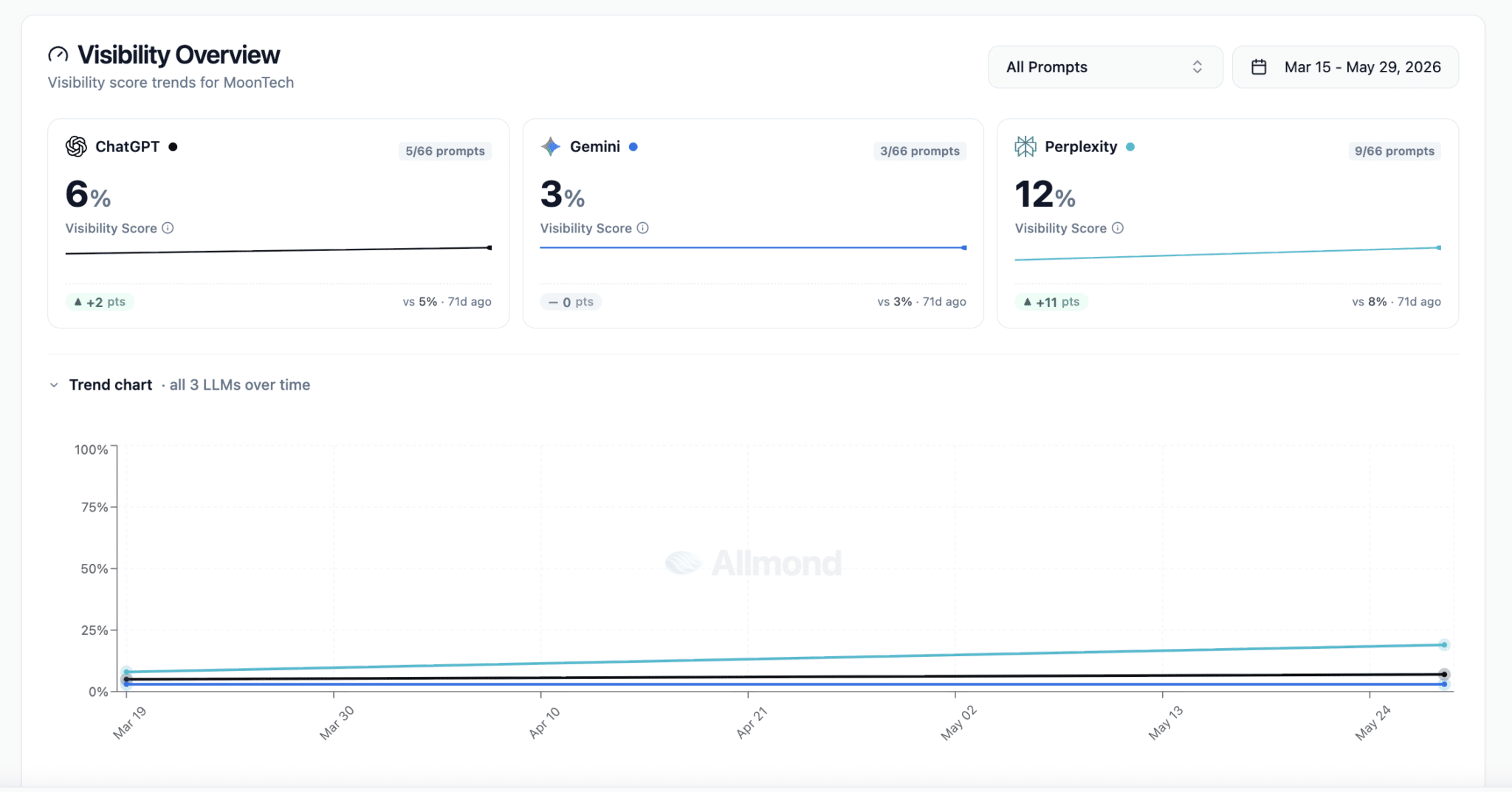
By the end of the three months, according to Allmond.app, ChatGPT visibility was at 6%.
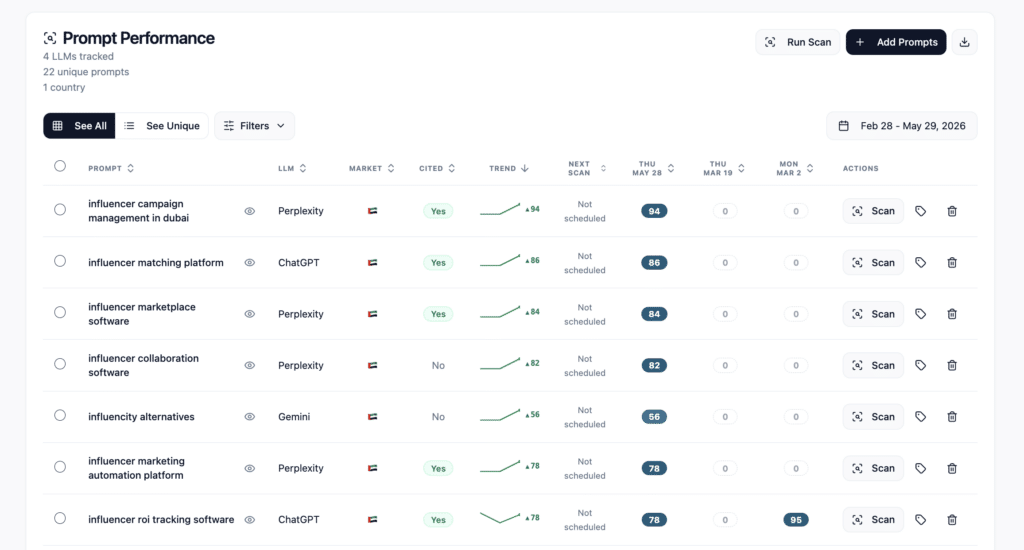
The highest-scoring prompts, “influencer collaboration software” and “influencer marektplace software,” were hitting scores of 82 to 84 in the UAE market. “Influencer marketing in MENA” improved from 51 to 70 over the period.
And the referral traffic from LLMs started showing up in GA4. 47 sessions from Perplexity and 21 from ChatGPT – a channel that simply didn’t exist before we started.
Good content needs backlinks. That’s still true and it’s not going to stop being true anytime soon.
With a tight budget for link acquisition, we ran targeted outreach focused on quality. We secured 10 backlinks from relevant industry publications: 7 live, 3 in the publishing queue at the close of the campaign.
We also got the platform placed in competitor alternatives roundups, with one live placement on a high-traffic page and three more in progress.
The backlinks came from websites that have authority in the influencer marketing industry and attract the right audience.
Results started showing up within the first few weeks and kept building from there.
The biggest change was visibility. Search impressions grew from 23 to 80K, putting the brand in front of a much larger audience.
The CTR dipped initially from 13% to 2.5% as impression volume expanded well beyond a narrow high-intent audience, then recovered to 4.2% as more relevant traffic started finding its way in.
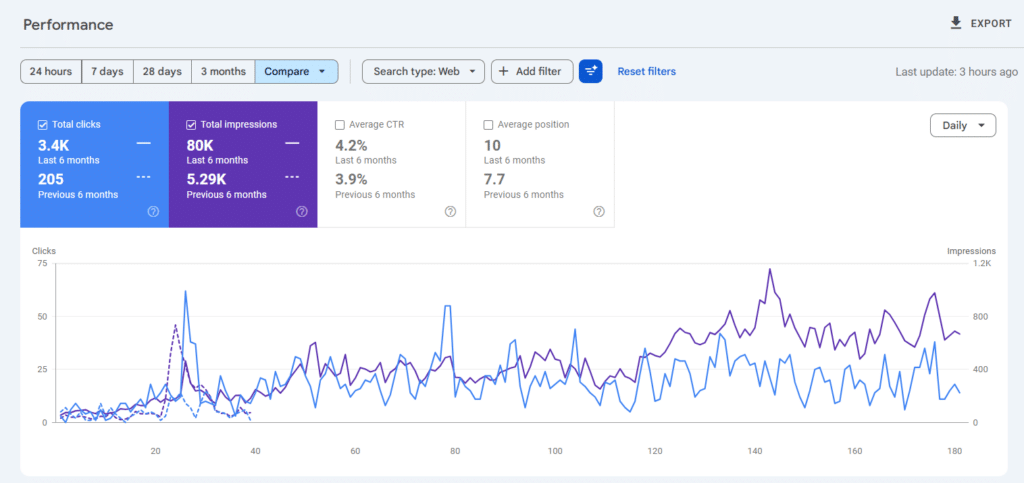
Average rankings improved from 18.7 to 10. Existing pages moved up in search results, while new pages started ranking for additional keywords.
Traffic increased, but so did engagement. A larger percentage of visitors were completing key actions on the website, with the session key event rate growing from 9.65% to 44.58%.
That’s what happens when you target the right intent from the start.
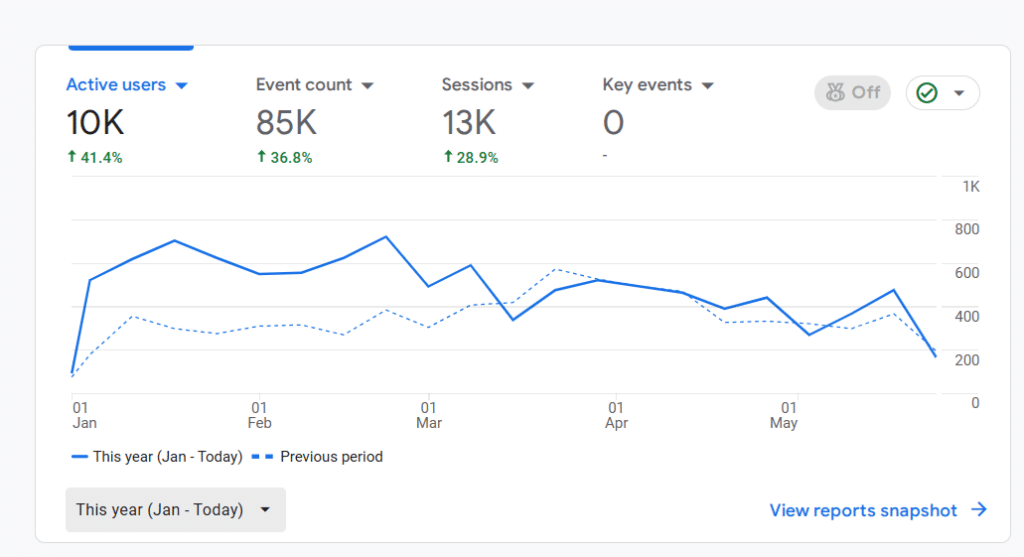
The continued growth to 10K active users and 13K sessions by May 2026 shows the content compounding rather than plateauing.
Aspire and Influencity are sitting at 25–33% across platforms. That’s the gap to close. But the direction is clear, every platform is moving in the right direction, with Gemini doubling and Perplexity going from zero to a measurable presence.
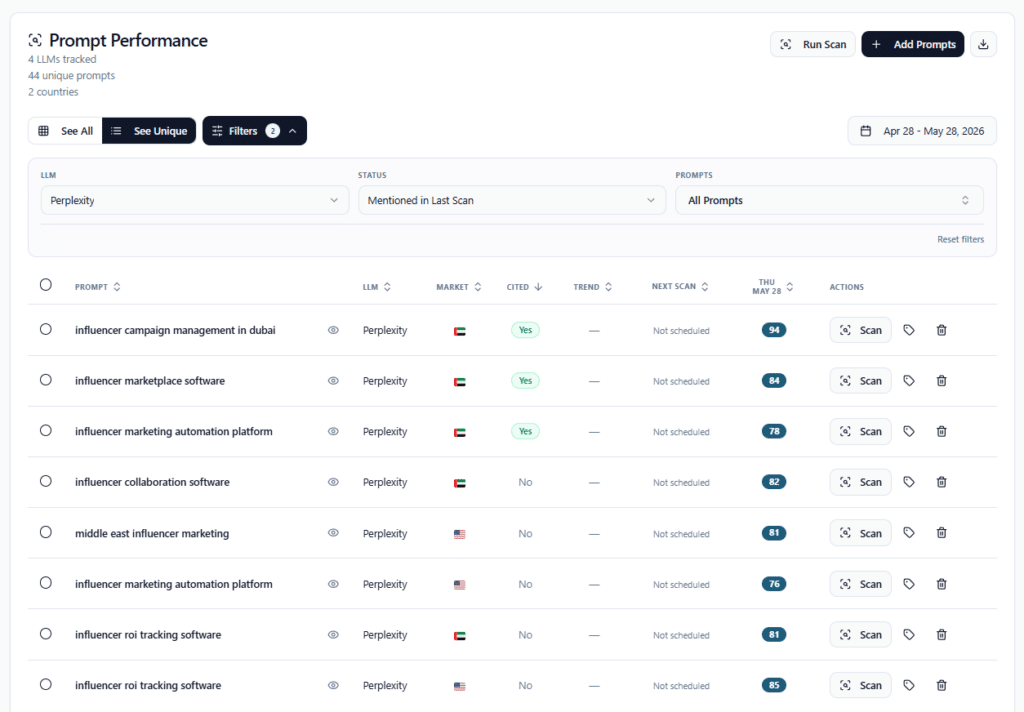
The Perplexity progress deserves a specific mention. At the start of the campaign it was zero, not just low, literally absent. By May 2026 the platform is being actively cited on Perplexity for high-intent UAE queries:
High scores across the board, including on prompts that aren’t yet citing the platform. That’s the pipeline. The content is in the consideration set; the citations follow.
Bing deserves a mention on its own. 475% growth is hard to ignore, especially in a market where most competitors aren’t paying attention to it. There’s real upside there.
The foundation is there and it’s holding. The next phase is about closing the gaps that are still obvious.
ChatGPT visibility reached 7%, Gemini 4%, and Perplexity started citing the platform for UAE-related searches. There’s still plenty of room to grow, but the platform is now showing up in places where it was previously absent.
Aspire and Influencity at 25–33% across platforms is the benchmark.
Getting there means continuing to produce content that AI systems want to cite, expanding the prompt coverage, and pushing harder on the US market where scores are strong but citations are still lagging.
On the organic side, 10K active users and 13K sessions by May 2026 shows the content is compounding. The next step is to build on what’s already working. That means creating more pages around high-intent keywords, expanding the regional content that competitors have largely ignored, and continuing to grow visibility across search and LLMs.
There’s a lot of runway still ahead.
Looking to grow your SaaS through organic search and AI-powered discovery? Book a free call with the Quoleady team and we’ll map out what’s possible.
Maja Volarević
Project Manager and Content Strategist
Read also


I often see teams paying for 15–20 different marketing tools while still struggling to publish con

Olga Mykhoparkina
Jun 23, 2026
High-quality content can help you improve your brand authority, increase traffic, attract leads and

Ardak Yeshniyazova
Jun 15, 2026
Are you a SaaS startup seeking to enhance your online presence and draw more visitors to your websit
Ardak Yeshniyazova
Jun 15, 2026 Let us know what you are looking to accomplish.
We’ll give you a clear direction of how to get there.
All consultations are free 🔥