Iryna Kutnyak
Content Marketing Strategist
Iryna Kutnyak
Jun 02, 2026Many SaaS companies still publish educational articles that could belong to literally any company in their niche. The product barely appears, the content doesn’t influence buying decisions. And in 2026, AI tools summarize those articles without sending traffic back.
That’s the new reality your content strategy needs to adapt to. Generic “how-to” content is easy for an LLM to absorb, paraphrase, and serve as an answer. But an article that shows how your product solves a specific problem, with real workflows, annotated screenshots, and product-specific logic is much harder to commoditize.
Working with dozens of B2B SaaS companies, we’ve watched this change happen in real time. The companies whose content keeps performing share one thing in common and that is, their articles couldn’t exist without the product behind them.
This guide covers what product-led content is, why it matters more now than it did two years ago, how to build it, and what the best SaaS companies are doing differently in 2026.
Product-led content (PLC) is a content strategy where your product appears naturally inside articles as the demonstrated solution to a problem your target audience is searching for.
It’s not one of those blog posts that’s secretly just a sales page. It’s not a tutorial so generic it could describe any tool. It’s an article where your product earns its place by solving something specific by showing workflows, screenshots, use cases, and implementation details that only you can provide.
In practice, product-led content shows up as:
The goal across all of these is the same: when someone reads the article, they understand your product better, and they’re closer to signing up.
For years, many SaaS companies grew traffic by publishing educational articles around high-volume keywords. While that approach can still work, generic informational content is becoming less effective. Search results are crowded, click-through rates are declining, and readers expect practical insights they can’t find everywhere else.
Here’s what’s changed.
AI Overviews now answer informational queries before users reach your article. A Semrush analysis of over 10 million U.S. desktop searches shows that AI Overviews now appear on roughly 13% of queries, and about 88% of those are informational searches (exactly the types of queries many publishers target with content). Instead of sending users directly to articles, AI Overviews synthesize an answer in a block above organic results, which studies link to lower CTR and higher zero‑click behavior for affected queries.
Generic guides are the first casualty. SaaS companies have spent years creating generic educational content that is easy for Google’s AI to summarize and answer directly. These are long introductory articles that explain what something is, list five to seven tips, and end with a soft CTA. These articles are easy for an LLM to summarize because they’re built from widely available information. They contain nothing the model can’t find and paraphrase from a dozen other sources.
Educational content takes more time and resources to produce, while often delivering fewer business results than commercial-intent content. And even when these informational articles do bring traffic, they rarely drive revenue. Most readers are there to learn, not buy tools.
Product-led content sits in a different category. It contains:
This type of content is difficult for competitors to replicate because it’s based on first-hand experience with the product.
An AI model can explain what CRM software does. But it can’t easily explain how your customers use a particular feature, the mistakes they make during setup, or the workflows that deliver the best results.
That’s what makes product-led content valuable. It contains details that only come from actually building, using, and supporting the product.
When AI tools choose what to cite in a response, they’re looking for the most specific, authoritative, concrete answers available.
Research from Princeton University and IIT Delhi found that content featuring original statistics and concrete data sees 30-40% higher visibility in LLM responses. The same research noted that product-related content accounts for 46-70% of all AI-cited sources because LLM tools look for the most authoritative coverage of specific subjects.
Think about what happens when someone asks ChatGPT how to automate LinkedIn outreach.
A generic article about outreach best practices might help the model understand the topic, but it doesn’t give it a reason to mention a specific company.
Content built around your product is different. Articles covering workflows, use cases, integrations, comparisons, and implementation details naturally connect the problem to your solution.
When someone asks about LinkedIn outreach automation, content about Expandi campaigns, Expandi workflows, or Expandi integrations gives search engines and LLMs a much stronger association between the problem and the product.
Entity clarity matters too. LLMs look for products, brands, integrations, and workflows when understanding a topic. Content that clearly explains how your product is used in practice creates a stronger association between your brand and the problems it solves.
A generic article about outreach may help explain the topic. An article showing how to run a LinkedIn outreach campaign with Expandi helps connect the solution to a specific product.
The Princeton-backed GEO research also confirmed that the overlap between Google’s top-10 organic results and AI Overview citations has dropped from roughly 75% in mid-2025 to between 17% and 38% by early 2026.
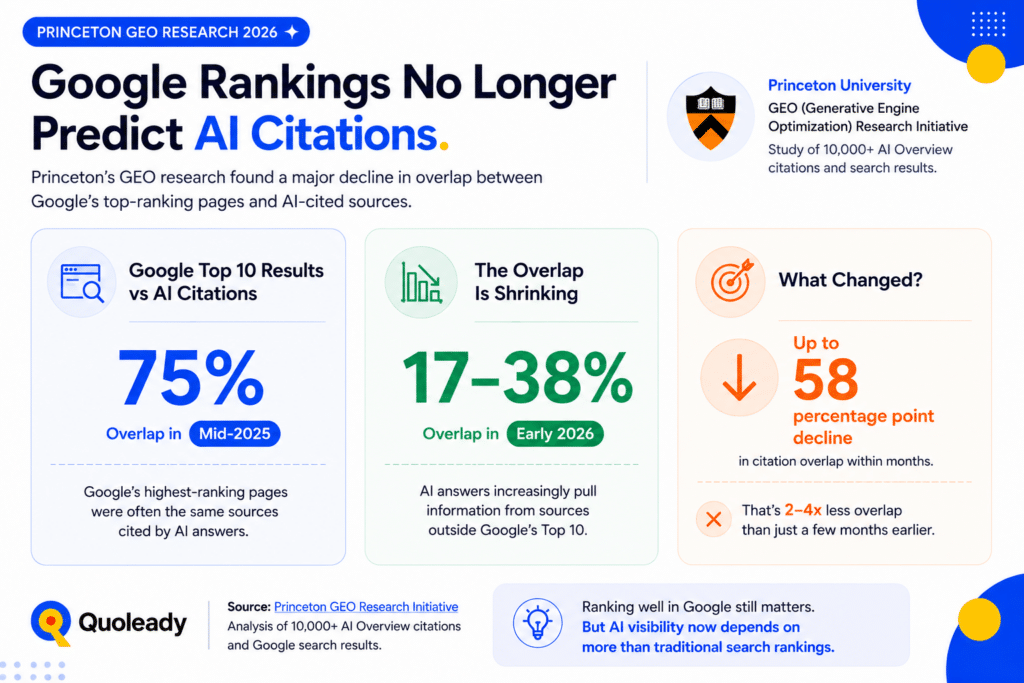
Just ranking on Google isn’t enough anymore if you want LLM tools to mention your content. Your content needs to be useful enough to get directly referenced. The best way to do that is by creating product-led content with real examples, workflows, and practical details.
Most people say PLC helps with onboarding, retention, and lead generation. That’s true, but it’s only part of the picture. Here’s what those benefits look like in 2026.
An article that describes a workflow inside your product can’t be replicated by a competitor. They’d have to use a different interface, produce different screenshots, and explain different steps. That makes your content inherently differentiated, which matters more now that AI tools can reproduce generic educational content on demand.
PLC takes active searchers from problem-aware to product-aware in a single article. A reader who finds your content through a search about “how to reduce churn in SaaS” and finishes the article knowing how your product tracks user health scores is in a fundamentally different position than someone who reads a generic churn article.
When your product name appears in AI answers, the reader lands on your content already partially sold. AI-referred traffic converts at a 23x higher rate than traditional organic search visitors because they arrive already informed. PLC with its clear product framing and direct CTAs is positioned to capture that.
Comparison and “best alternative” articles work really well for SaaS companies because they help people make buying decisions. And when those articles focus on real use cases instead of just comparing features, they feel more trustworthy, which also makes AI tools more likely to reference them.
Mid-funnel and bottom-funnel content that’s written with the product in mind helps guide readers toward taking action. Instead of just learning something new, they finish the article knowing what step to take next.
Consistent product-led content across a topic cluster signals to both search engines and AI tools that your brand owns a specific space. That’s how category leadership gets built through content.
Now that you know the advantages of product-led content let’s find out how to go about it. Here are five main steps to create your content piece:
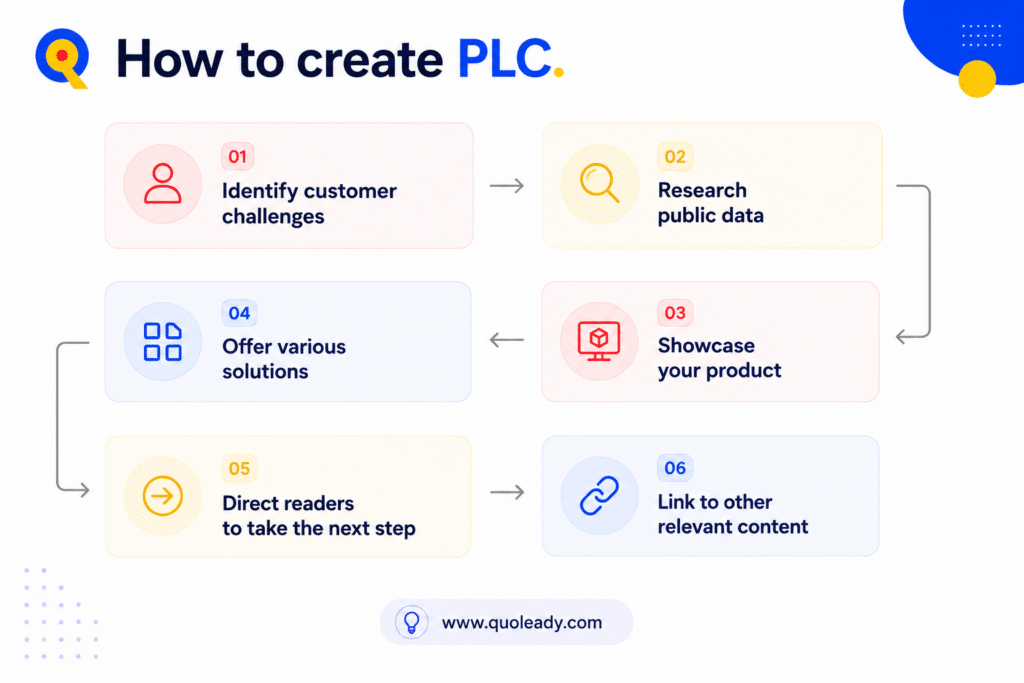
This is the most important step. The strategy for product-led content depends on two things: what problems your audience faces and how your product solves them.
Start with your customers. Talk to your long-time users and ask:
When Stefan Smulders founded Expandi, he spent significant time on calls with early adopters before writing a single piece of content.
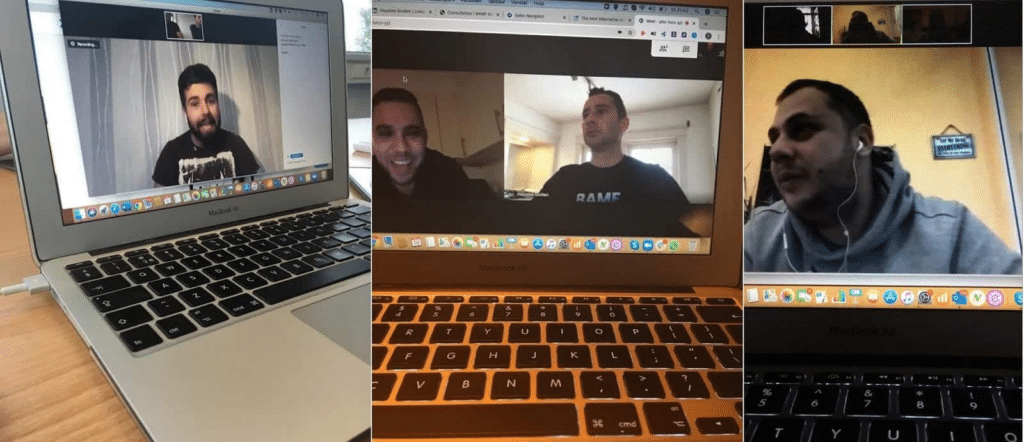
That research became the foundation for an entire content strategy, and contributed to Expandi growing from 0 to $8M ARR. Those early conversations showed us what problems people cared about and how to position the product as the solution.
Say you’ve talked to some of your brand ambassadors and have a list of topics to cover on your blog. You’re ready to make a content strategy out of it and get the SaaS content writing process started.
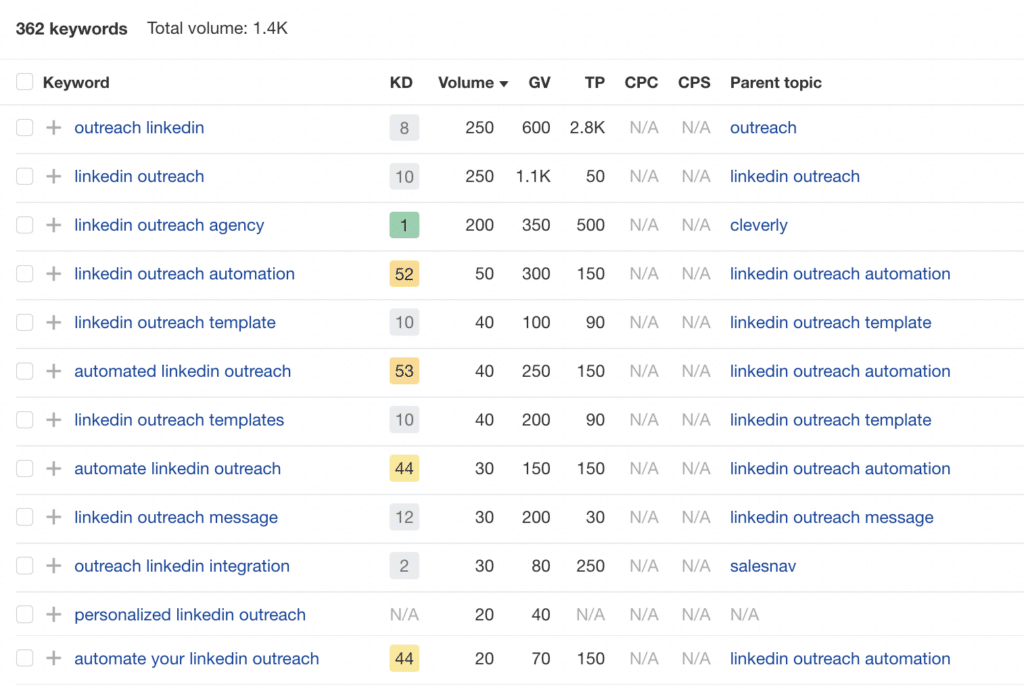
After customer interviews, validate demand. Check the search volume for the problems on your list. If the keyword “LinkedIn outreach automation” has meaningful monthly search volume, you know there’s an audience for an article that addresses it, and that shows your product solving it.
Check the keywords and see how many people are potentially interested in a problem solution (that’s your search volume).
In the example above, we see that there’s an interest in the LinkedIn outreach topic, but we can also plan some supporting articles with outreach templates, automation tools, a list of SaaS SEO agencies etc.
Now you have a very rough content plan.
When it comes to article research, make sure you find relevant statistics, market reports and links to trustworthy resources. Speak about the issue you will solve in the article and don’t forget to mention the methodology you used to gather data.
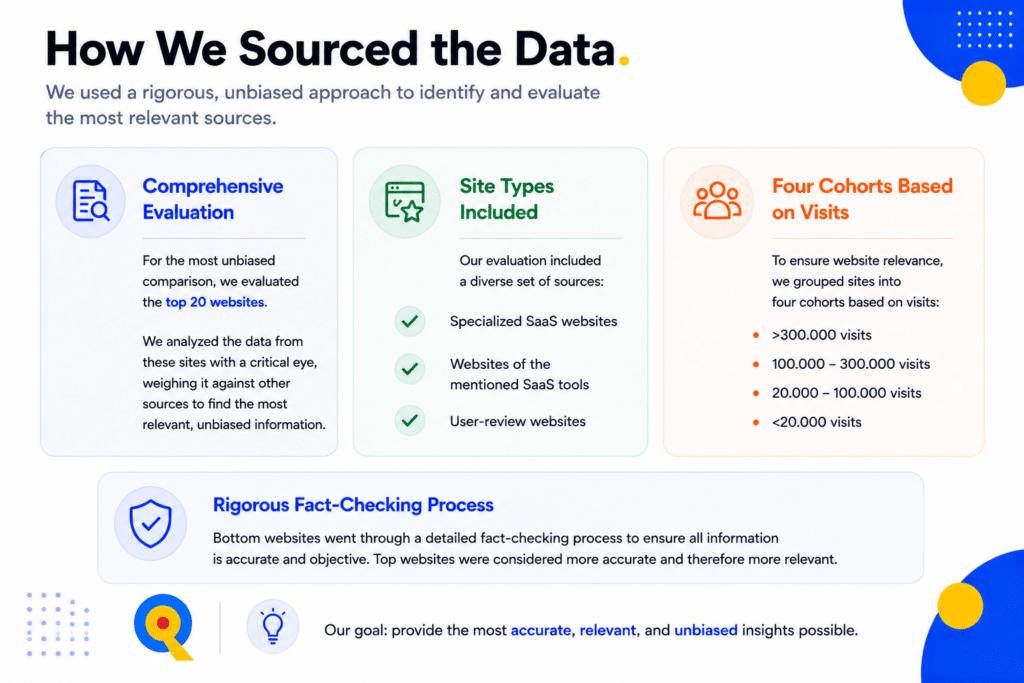
At this stage, also look for what content currently ranks. If the top results are all generic educational articles without product context, there’s a clear opening for a more specific, product-led piece.
This approach will help you gain the trust of new readers and turn them into customers over time.
For example, in one of our recent case studies, we explain how we applied the product-led content strategy for YouScan to get 29X more organic clicks to their pages. They have created a number of internal research materials that allowed us to turn our blog articles into unique, research-based content assets. One of those articles actually drove 17K organic clicks a few weeks after publishing.
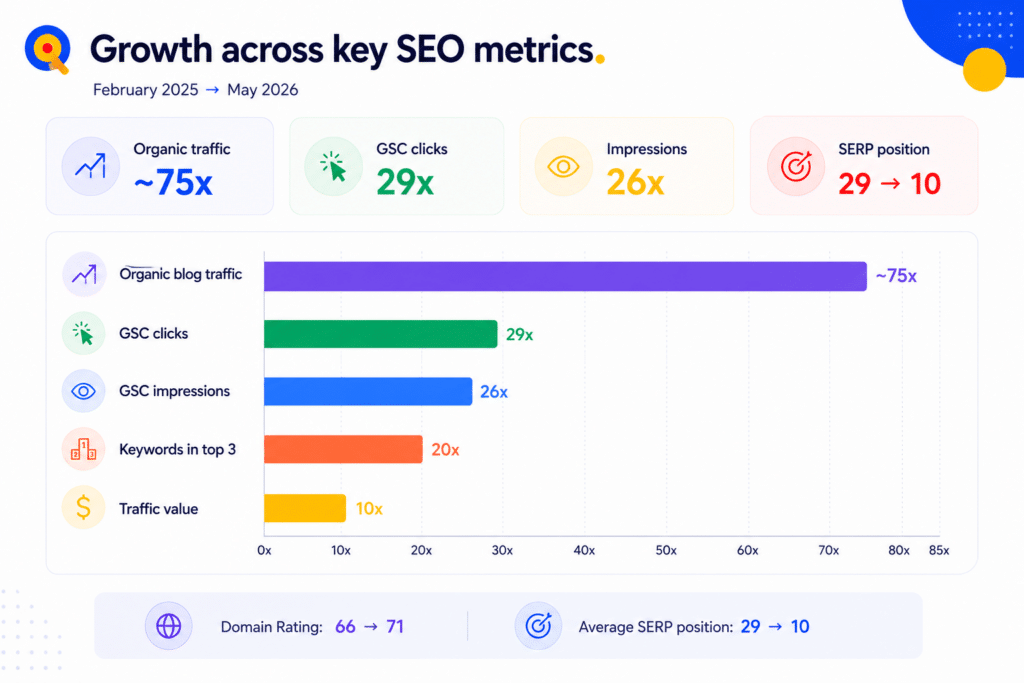
YouScan SEO metrics growth in 12 months
When potential customers realize their core issues will not be fixed with your product, they will begin looking for alternatives. Don’t be afraid to mention competing tools, listing their pros and cons. Try to be unbiased, not to seem desperate or force your product on customers.
Covering alternatives builds trust. Readers who feel like they’re getting an objective view are more likely to take your recommendation seriously when your product comes up. You want customers to feel that they are in control of decision-making.
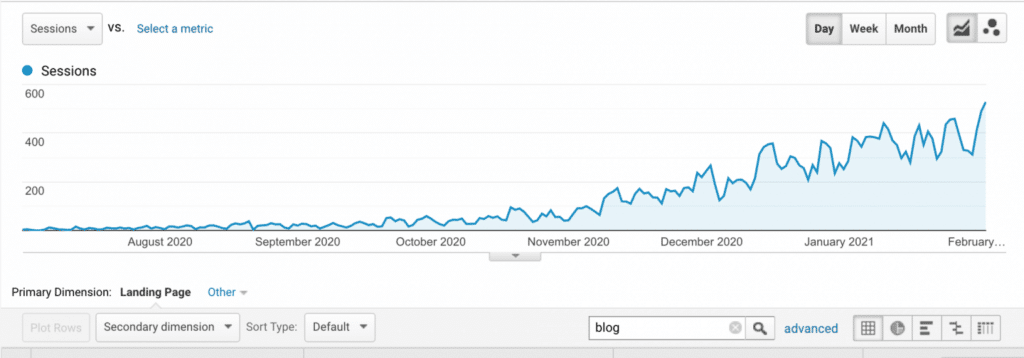
When we worked with RingBlaze on a series of competitor alternative and comparison articles, it drove 50K visits with 650 leads.
Once you’ve established context and covered other options, demonstrate your product in action. Show the specific workflow. Use screenshots. Explain not just what the feature does but why it matters for the problem the reader came to solve.
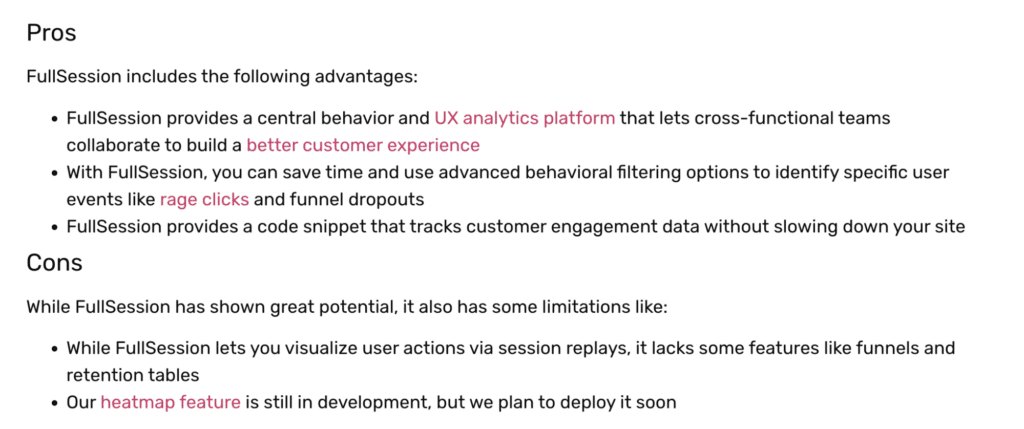
Businesses worry that disclosing their products might make readers believe that they are only interested in making money. However, the proper approach will attract more clients. You may still discuss your product without forcing a deal. The objective is to provide a unique perspective on solving a problem.
It’s a common mistake to think that users know what to do after reading your article. Guide your readers throughout the text, adding banners and call to actions (CTAs). Those can be:
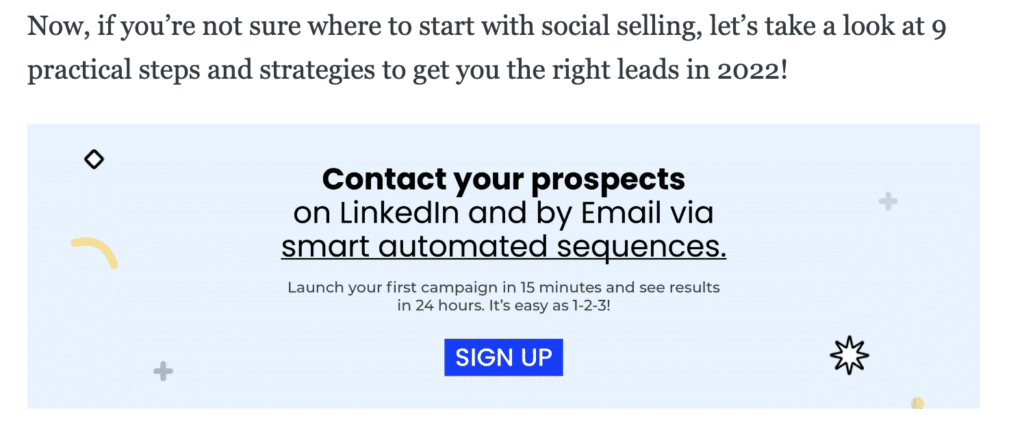
Articles with CTA provide guidance for the reader – what to do, where to click, how to sign up. If used properly – they may result in additional conversions.
You probably won’t win a deal from a single PLC article on your blog. Even if you start with a lower number and publish regularly, refer to other articles and showcase your market expertise through your articles.
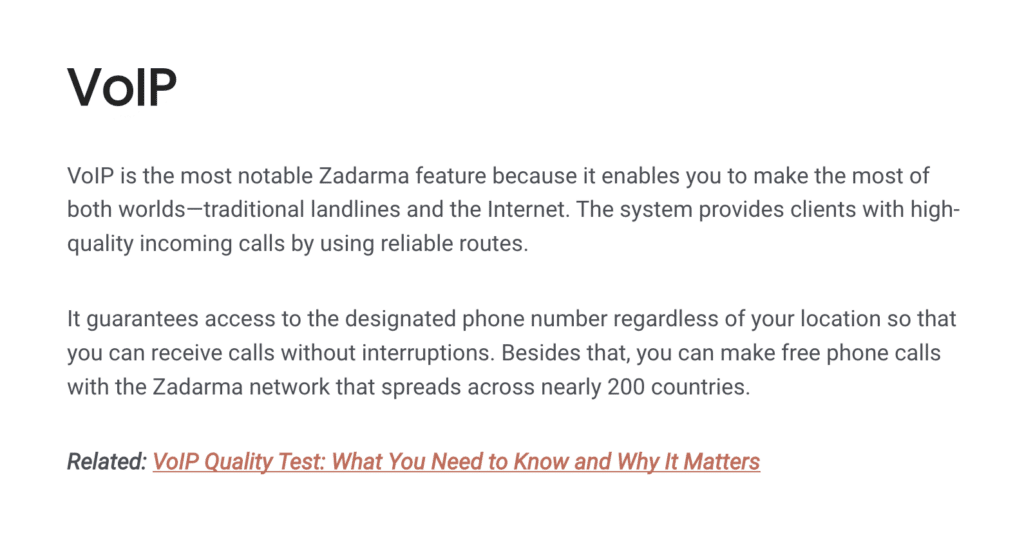
Example of internal linking on RingBlaze blog
Internal links keep readers on your site and they build topical authority across your blog. A pillar-cluster structure where a comprehensive article links out to narrower subtopics, and those subtopics link back is one of the most effective ways to signal expertise to both Google and AI tools.
The format you choose can make a big difference in how well your PLC performs. Some formats work better than others.
If your content is meant to drive signups, don’t just describe the product. Show it.
Screenshots make content more credible and easier to follow. They help readers understand the workflow, visualize the outcome, and see where your product fits into the process.
They’re also one of the easiest ways to create content competitors can’t easily copy. Anyone can rewrite a blog post. They can’t recreate your interface, customer workflows, or product experience.
Some simple ways to do this:
A good rule of thumb: if you’re explaining how to do something with your product, there should probably be a screenshot nearby.
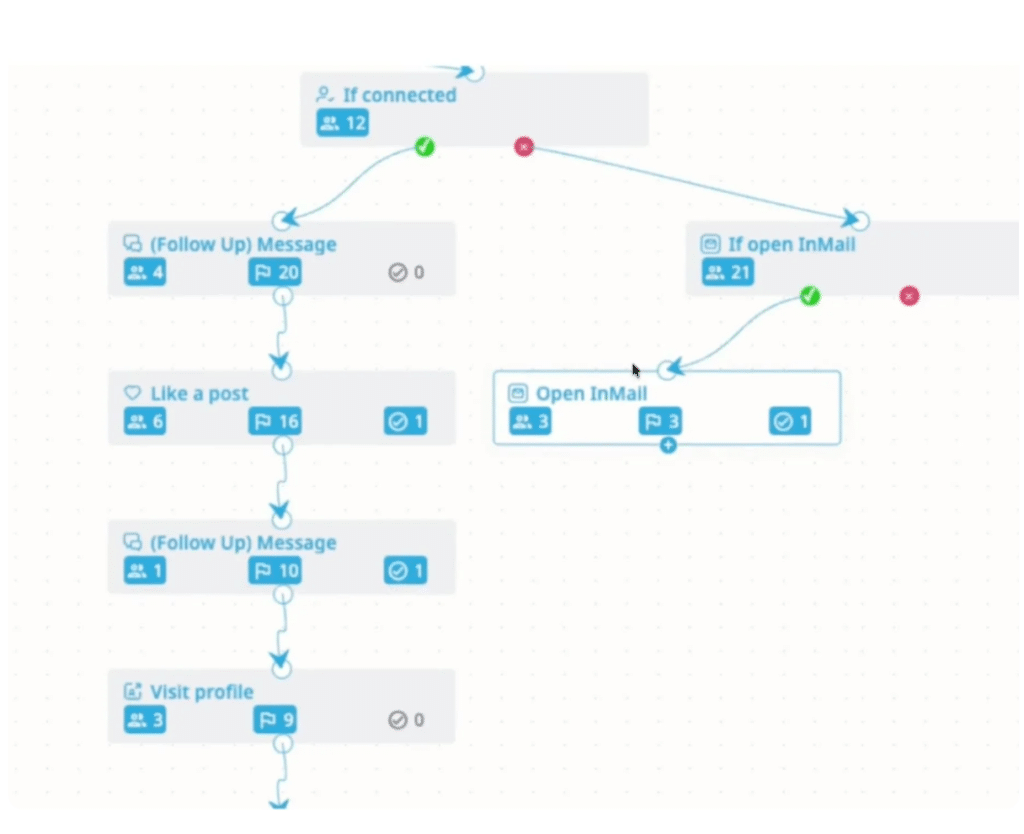
Example of screenshot used by Expandi explaining their AI workflow feature in one of their product-led articles.
Strong examples can show how effective product-led content marketing could be. We decided to analyze a few companies:
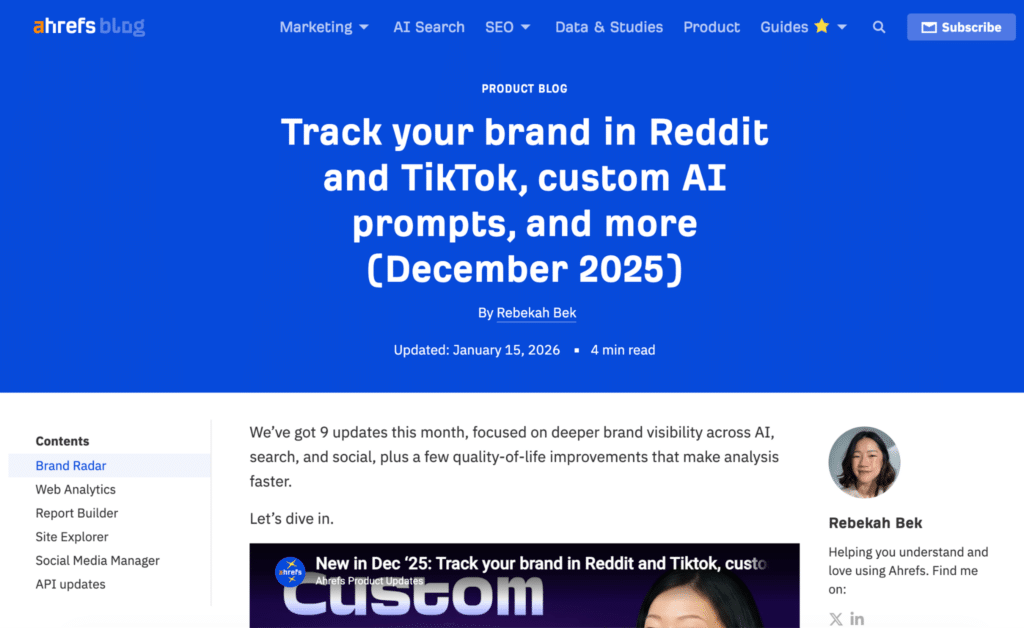
Ahrefs has built one of the most consistently cited content libraries in SEO. Their articles teach SEO concepts and show Ahrefs data and features as the tool for implementing them. Each article is a product-led tutorial written as a comprehensive guide. They also invest heavily in free tools (backlink checker, traffic checker) that create organic product exposure at scale. A good recent example: Track your brand in Reddit and TikTok, custom AI prompts, and more is a product update post that reads as a practical workflow guide rather than a changelog.
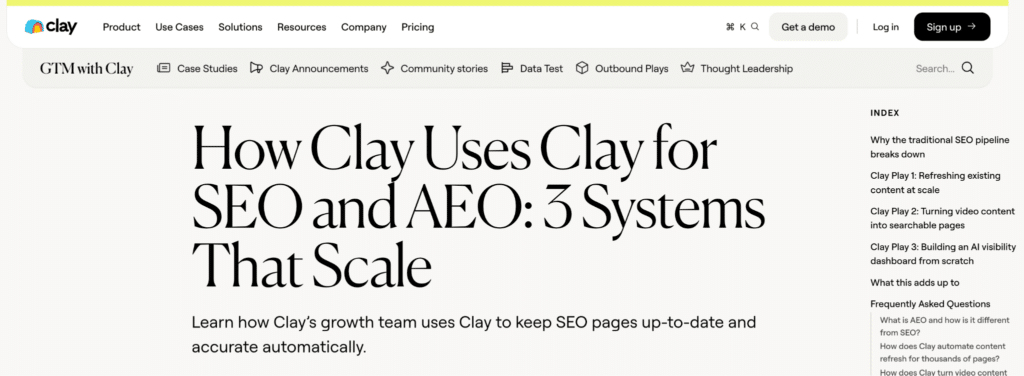
Clay has grown significantly on the back of workflow-focused content that shows how to build specific outbound sequences using Clay’s data enrichment features. Their content is intensely specific and often covers a single workflow in depth. This is what makes it highly citable and relevant to buyers at the consideration stage. Their article How Clay Uses Clay for SEO and AEO: 3 Systems That Scale is a strong example. They’re documenting their own internal workflows with the product, which makes the content credible in a way no outsider could replicate.
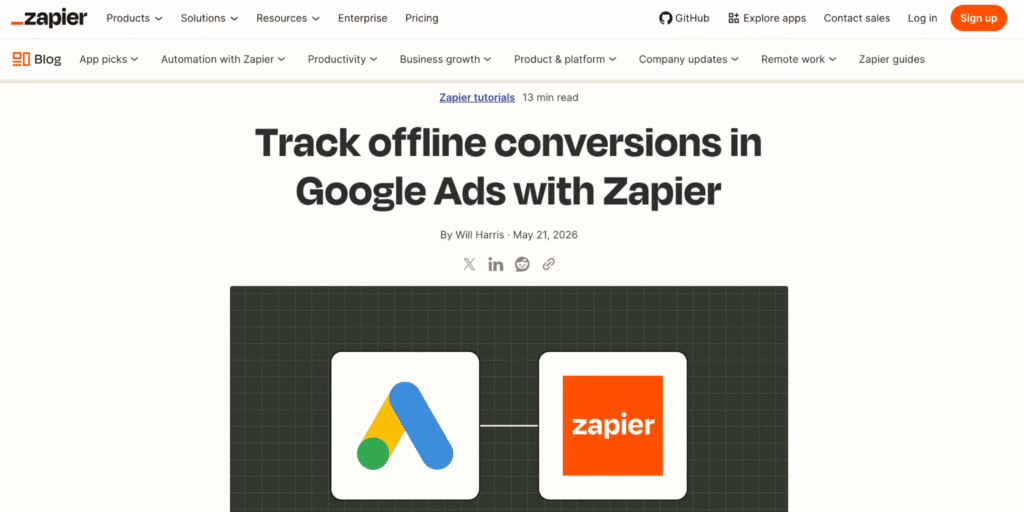
Zapier publishes integration-specific content at scale like “How to connect [Tool A] to [Tool B] with Zapier.” These articles are almost pure product-led content but they can’t exist without the product. They map directly to what buyers search for when evaluating automation tools. They also perform exceptionally well in AI search because they’re specific, structured, and tied to named tools. See Track offline conversions in Google Ads with Zapier – a narrow, high-intent workflow article that answers a specific buyer question and demonstrates the product doing the work.
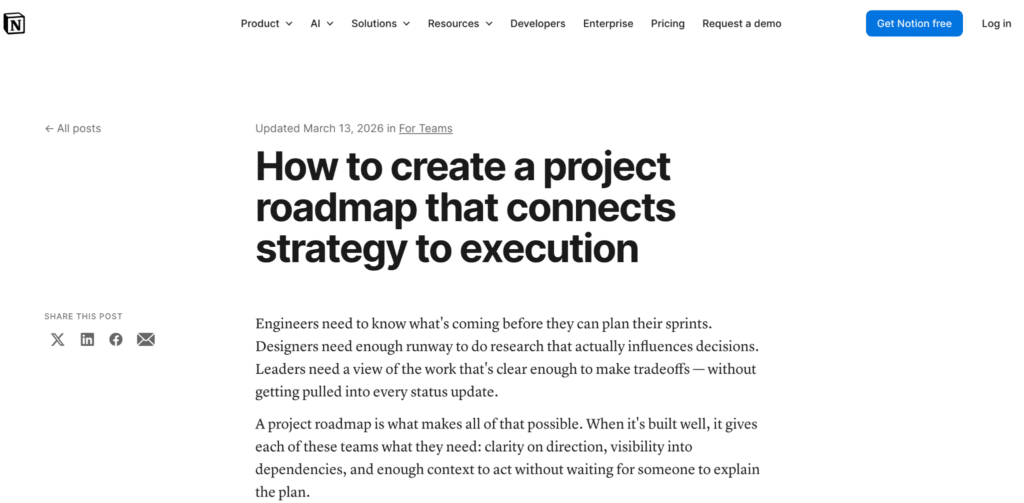
Notion makes content around its templates by sharing them and showing people how to use them. The template itself is part of the product, so when they publish something like How to create a project roadmap that connects strategy to execution, they’re helping people solve a real problem while showing exactly why the product is useful. It’s easy to share and naturally brings in signups because the solution and the product are the same thing.
Having worked with dozens of SaaS companies on their content strategy, here are the mistakes we see most often.
Even great product-led content won’t work if the right people never see it. SEO is still important, but relying on organic traffic alone is slower and more competitive now. Here’s what helps alongside SEO:
Brands mentioned in AI Overviews also see stronger performance in search, including more organic and paid clicks. So distribution today also impacts how visible your brand is in AI search.
SaaS needs product-led content for three main reasons:
Onboarding starts from the first interaction with your brand, usually well before a user signs up. PLC content that shows the product in action sets expectations accurately, which means users who sign up already understand what they’re getting into. That reduces early churn.
When customers understand your product better from the content they’ve consumed, support costs drop. When they’ve seen the full capability of the tool before signing up, they’re more likely to stick around. The result is a lower cost of acquisition and a longer customer lifetime.
Writing consistently about your product’s use cases forces you to map the gap between what your product does and what customers actually need. That’s useful market research. Sometimes those gaps reveal features to build. Sometimes they reveal workflows that already exist but nobody’s explained well.
We use a product-led content strategy for Quoleady, and it’s the same approach we apply for our clients.
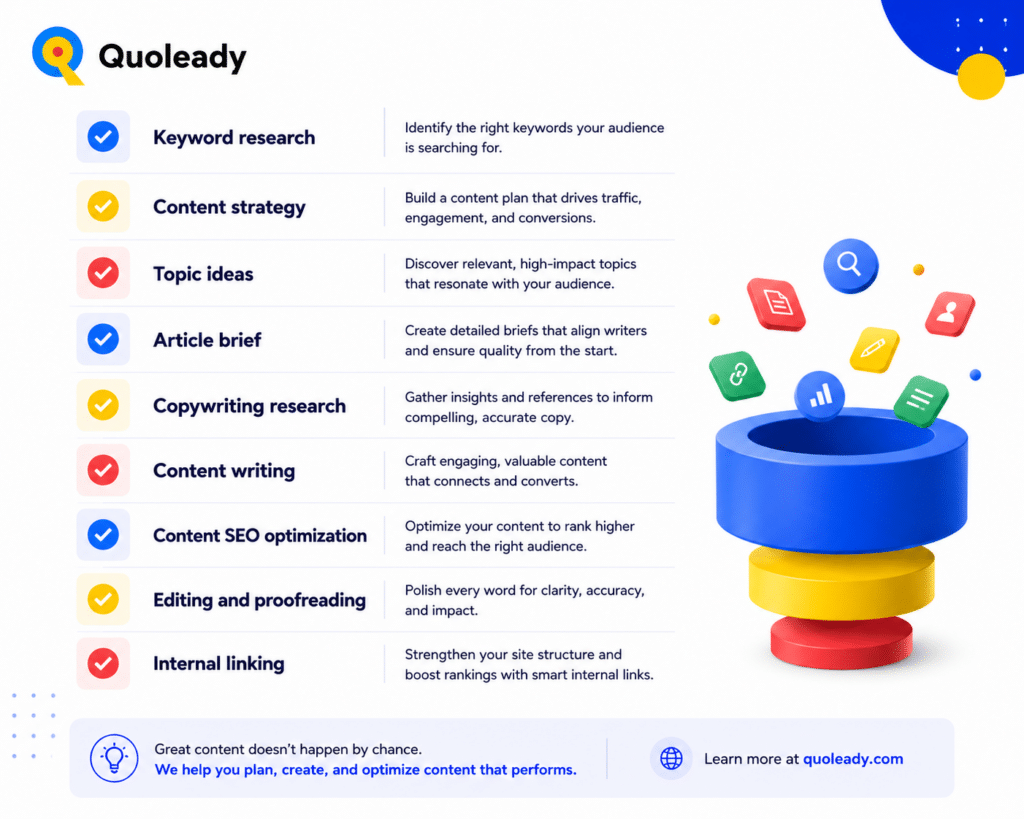
At Quoleady, we start by understanding what people are searching for and who we’re trying to reach. From there, we build a content plan that covers every stage of the funnel, from awareness to conversion, with product-led content helping turn readers into customers.
Jump in on a call with us today.
In 2026, the SaaS content that works best is the kind that’s built around the actual product.
Generic educational content is easy for AI to recreate and easy for competitors to copy. But content that shows real workflows, real screenshots, and real use cases is much harder to replicate.
The companies winning in search right now are the ones creating content that’s specific, useful, and clearly based on real experience. Their articles answer questions well enough to get noticed, trusted, and drive conversions.
That’s what good product-led content does.
If you want help building a content strategy that brings in signups, book a call with Quoleady. We’ll show you what’s working in your niche and where you should focus first.
Product-led means building your marketing strategy around the product itself. Instead of depending mostly on sales pitches or vague messaging, you show people the value by letting them try the product, experience the onboarding, and see how it works.
A product-led culture means the product is at the center of how the company grows. Every function, including content and marketing, is oriented around showcasing and improving the product.
This is a way for companies to put their products at the center of all company activities. Instead of relying on sales reps, all marketing strategies are done through the product.
Iryna Kutnyak
Content Marketing Strategist
Read also



GoRout, a leading provider of wearable sports technology, specializes in advanced coach-to-player co
Maja Volarević
Sep 15, 2026
At Quoleady, we’ve believed in content marketing for years. After working with more than 200 B2B S

Olga Mykhoparkina
Jul 27, 2026
At Quoleady, we’ve worked with more than 200 B2B SaaS companies, from early-stage startups to
Olga Mykhoparkina
Jul 10, 2026 Let us know what you are looking to accomplish.
We’ll give you a clear direction of how to get there.
All consultations are free 🔥